The "stable quality and quantity" of foreign trade shows positive changes. China’s economy has sufficient momentum and great potential
CCTV News:In the first five months of this year, the total import and export value of China’s goods trade was 17.5 trillion yuan, a year-on-year increase of 6.3%. Among them, the import and export in May was 3.71 trillion yuan, an increase of 0.6 percentage points to 8.6% over April. From the ups and downs of exports in the first quarter to the monthly improvement since April and May, China’s foreign trade import and export has embarked on a steady "rebound curve".

According to the statistics of Shanghai Customs, in the first five months of this year, the total value of foreign trade import and export in the Yangtze River Delta region reached 6.4 trillion yuan, a record high, with a year-on-year increase of 6.1%, accounting for 36.6% of the total value of national imports and exports. The import and export of high-tech products was 1.56 trillion yuan, up 8.4% year-on-year, accounting for 35.2% of the total import and export value of similar goods in China.
In the first five months, the import and export of Beijing-Tianjin-Hebei region was 2.14 trillion yuan, up 5%, a record high in the same period, accounting for 12.2% of the total foreign trade value of the country in the same period. Among them, the proportion of foreign trade in Beijing-Tianjin-Hebei region is 72.8%, and the growth rate of foreign trade in Shangla region is 3.2 percentage points, and the role of "locomotive" is further highlighted.
The total foreign trade value of nine cities in mainland Guangdong-Hong Kong-Macao Greater Bay Area reached 3.45 trillion yuan, a record high in the same period, with a year-on-year increase of 13.8%, accounting for 19.7% of the total import and export value in the same period. Among them, the import and export value of Shenzhen accounts for 52.6% of the total foreign trade value of nine cities in Guangdong-Hong Kong-Macao Greater Bay Area.
The cumulative import and export value of the nine provinces (regions) in the Yellow River Basin was 2.37 trillion yuan, a record high, with a year-on-year increase of 4.2%. Among them, the import and export value of Shandong Province is 1.32 trillion yuan, accounting for 55.7% of the total regional import and export value.
The export of high-end intelligent green products drives the growth of foreign trade.
In recent years, China’s machine tool industry has accelerated its development, the policy has continued to help, and the localization rate has been continuously improved. 2014— In 2023, the export value of China’s machine tools increased by 9.1% annually, from a country with a trade deficit to a country with a trade surplus, from a trade deficit of 39.17 billion yuan in 2014 to a trade surplus of 28.11 billion yuan in 2023, accounting for 8.8% to 17.3% of the global export share. This year, the proportion of machine tool exports to emerging markets such as Latin America, the Middle East and India has increased rapidly.

According to the relevant person in charge of the General Administration of Customs, the continuous consolidation of foreign trade is closely related to the continuous recovery of China’s economic operation. Driven by the good export momentum of high-end, intelligent and green products and the steady expansion of import scale, the monthly import and export growth rate has further accelerated.
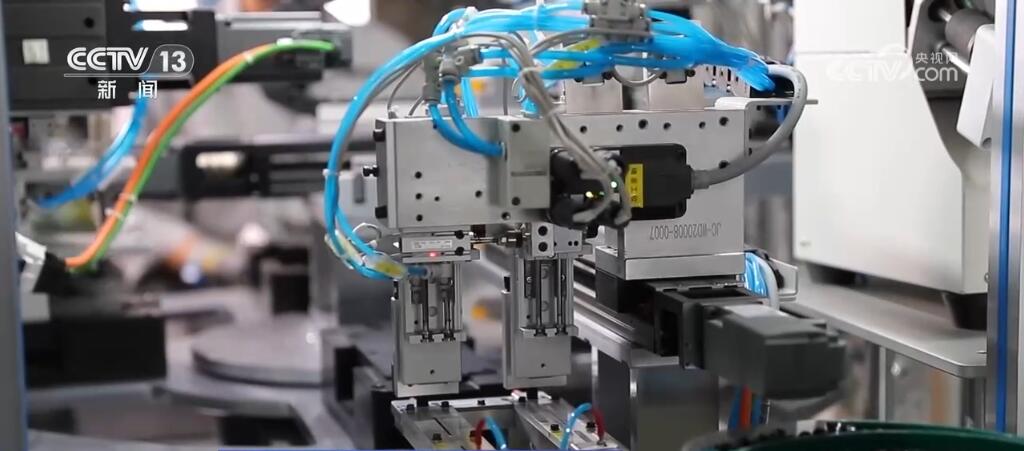
Zhejiang Province is the province that exports the largest number of machine tools in China, this year 1-mdash; In May, the export volume and value of Zhejiang machine tools increased by 8.0% and 24.9% respectively. Entering the production workshop of this CNC machine tool company in Taizhou, Zhejiang Province, many production lines are stepping up their horsepower to make orders from Malaysia.

With the improvement of independent R&D capability and international vision, the internationalization process of China industrial machine tool enterprises is accelerating. More local manufacturing enterprises will focus on building the "Belt and Road" emerging market, speed up the overseas market layout, and let China’s high-end equipment go abroad and go global.
Customs data show that in the first five months of this year, mechanical and electrical products with high technical content and added value accounted for nearly 60% of exports. Among them, the export of ships, electric vehicles and household appliances increased by 100.1%, 26.3% and 17.8% respectively.
Labor-intensive traditional industries actively explore emerging markets.
Also in Zhejiang, a major foreign trade province, labor-intensive industry, as a traditional dominant industry, has been in the first place in the country since 2019, and the national share of labor-intensive products has also increased from 24.6% in 2019 to 27.9% in the first five months of this year.

Walking into the exhibition hall of this technology company in Zhejiang, the desks and smart kitchen furniture that can be lifted automatically are an eye-opener. In the early years, the company mainly produced and exported drive products and electromechanical spare parts. With independent brands recognized by customers in more than 100 countries and regions, enterprises began to lay out the international market of finished furniture last year.
With a keen sense of smell and quick response, many labor-intensive enterprises in Zhejiang Province have handed over a bright "report card" in exploring emerging markets.

In the first five months of this year, the proportion of Zhejiang’s exports to countries that jointly built the "Belt and Road" exceeded 50%, reaching 51.4%, up 4.2 percentage points from 2019. Among them, the proportion of exports to ASEAN, Latin America, Africa, Central and Eastern Europe and other markets has increased significantly.
The vitality of foreign trade business entities continues to be stimulated.
Through the window of foreign trade, we can see that China continues to expand its high-level opening up. A series of policies and measures to "stabilize foreign trade" have helped the majority of foreign trade entities to overcome difficulties, innovate and develop, and promote "stable quality and quantity" of foreign trade.

Entering Jiangsu, a power tool company, the production line goes from processing to assembly to packaging in one go, and these assembled power tools are about to be shipped to all parts of the world.

Private enterprises take the initiative to seek innovation and progress, and strive to open up and adapt to the global market. On the other hand, the government and relevant departments continue to optimize the business environment, strengthen policy and financial support, and serve the high-quality development of private enterprises.

Customs statistics show that in the first five months of this year, the number of foreign trade business entities with import and export performance in China increased by 8.7% year-on-year. Among them, the number of private enterprises increased by 10.1%, and the import and export value increased by 11.5%, accounting for 2.6 percentage points higher than the same period of last year to 54.7%.
The stabilization of foreign trade reflects China’s super-large-scale market advantage.
According to industry insiders, as the second largest commodity consumption market in the world, new technologies and products are fully competitive in China and commercialized quickly, thus being recognized by the wider international market. According to a recent survey conducted by the China Council for the Promotion of International Trade, 81.6% of foreign trade enterprises predict that their exports will improve or be flat in the first half of the year, and 65.1% of the enterprises surveyed have increased or been flat in new orders compared with the previous quarter.