Where is the god of killing the Honda 2.0T engine at the same level?
[car home Engine Disassembly] Guangqi Honda Guandao will be launched in the fourth quarter of this year. The direct competitor of this brand-new SUV is a joint venture brand medium-sized SUV headed by Guangqi Toyota Highlander. In order to make Crown Road "a hit" in the medium-sized SUV market, Honda equipped it with a brand-new 2.0T turbocharged engine. This 2.0T engine equipped with Earth Dream technology has certain advantages in power parameters compared with competing products with the same displacement. How does the engine achieve a balance between power and fuel economy? What are the characteristics of the VTEC valve timing and lift control system of this engine? What is the relationship between this engine and the 2.0T engine used in Civic Type R? The disassembly of this article will be interpreted for you one by one.
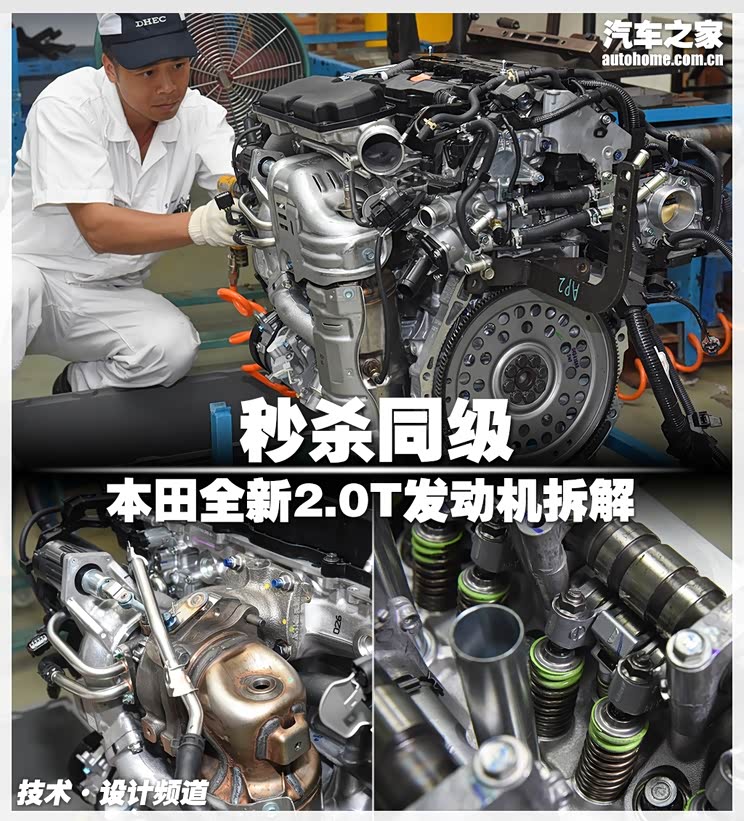
In the early years, the engine products released by Japanese manufacturers in China were mainly naturally aspirated. Low fuel consumption, durable leather and enough power were the main impressions of these engine products to consumers, which was also one of the reasons why some consumers loved Japanese cars. With the rapid introduction of European and American small-displacement turbocharged engines with both power and fuel economy, the advantages of Japanese naturally aspirated engines are getting weaker and weaker. Some keen Japanese manufacturers have realized the changes in the market several years ago and started the research and development of a new generation of turbocharged engine products.

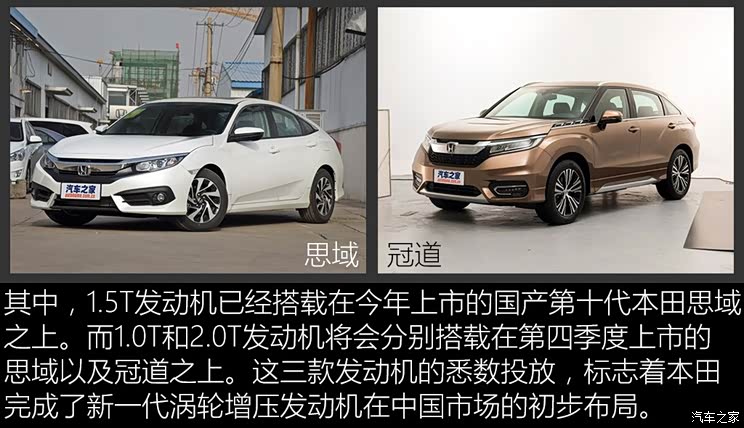
Perhaps you also learned some information about Honda’s new generation turbocharged engines in the "Analysis of Hybrid/Turbine Technology for Overtaking Opponents in an All-round Way" written by my colleague Huang Rongjia. Apart from the different displacements, the VTEC valve control mechanisms of these three engines have their own characteristics, mainly reflected in the different configurations of valve lift control mechanisms. Among them, the 1.0T engine is equipped with a valve lift control mechanism on the intake side, the 2.0T engine is equipped with a valve lift control mechanism on the exhaust side, and the 1.5T engine is not equipped with a valve lift control mechanism. Different configurations are more about balancing cost and performance. (Note: Honda VTEC technology mainly includes two main technologies: valve timing adjustment and valve lift control. As long as the engine is equipped with one or more of the above two technologies, Honda will call it an engine equipped with VTEC technology. )
● The strongest dynamic parameters kill the same level.
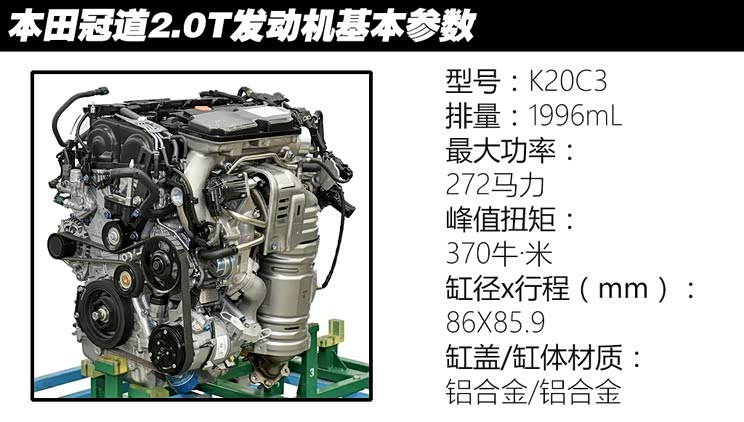
The disassembled Honda 2.0T engine has surpassed many competitors of the same level in terms of parameters. As can be seen from the table below, it is the strongest in the same level in terms of maximum power and peak torque. This article will take a look with you to see what this model relies on to achieve such parameters.
● What is the intention of configuring the exhaust valve lift control system?
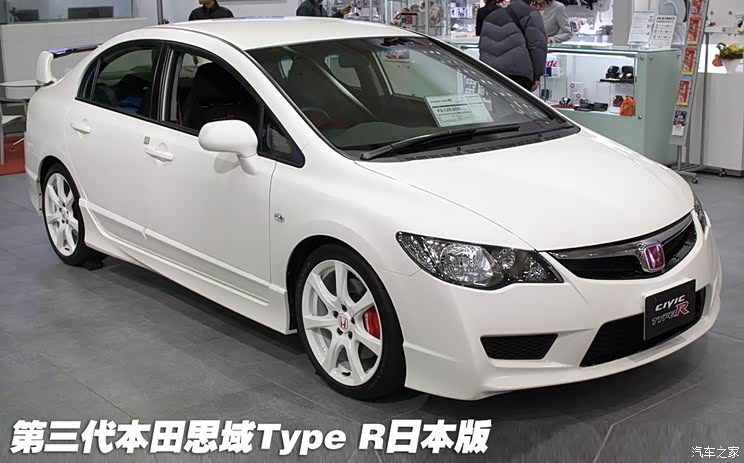
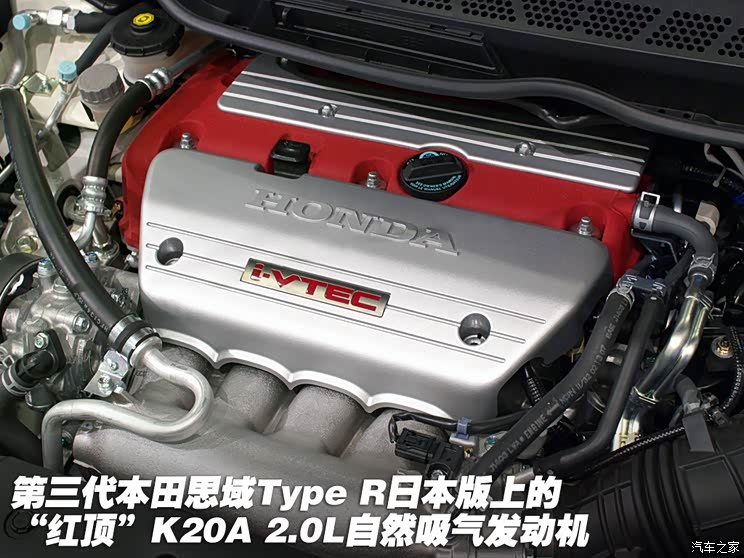
In addition to the mainstream variable intake and exhaust valve timing system, this 2.0T engine on the crown road is also equipped with a valve lift control system on one side of the exhaust valve, which can control the lift of the exhaust valve in stages. Among Honda’s K-series engines, only the red-top K-series engines (such as the red-top K20A naturally aspirated engine on the third generation Civic Type R) equipped with valve lift control systems on both sides of the intake and exhaust; Generally, K-series engines (such as K20A7 naturally aspirated engine on the seventh-generation Accord made in China) equipped on ordinary models will only be equipped with valve lift control system on the intake side. Then why is this 2.0T engine on the crown road only equipped with the valve lift control system on the exhaust side? Before solving this problem, let’s first review the mechanism and principle of Honda valve lift control system.
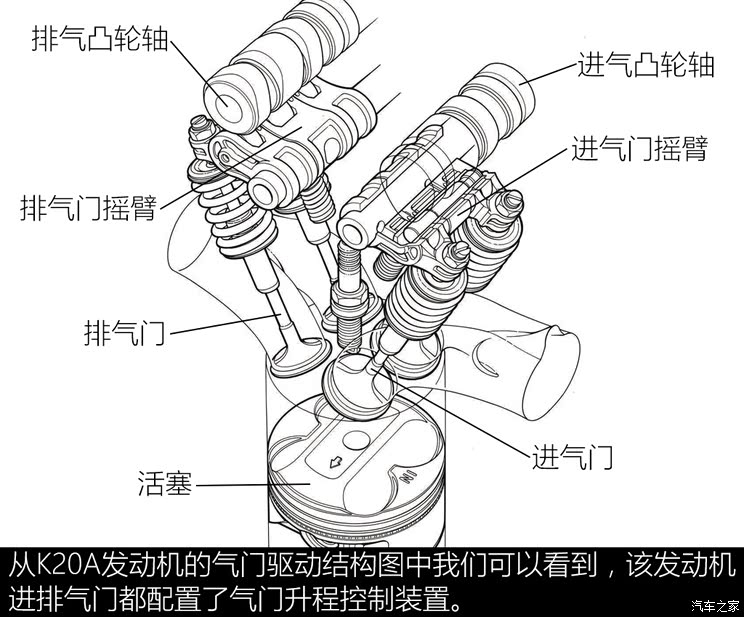

The following video is the intake side of the Honda L15B2 1.5L engine (mounted on the current Honda Fit, Fengfan and other models) that we dismantled before.The rocker arm of valve lift control mechanism shows video. The row of Honda K20C3 2.0T engine disassembled this time.Gas sideThe rocker arm of the valve lift control mechanism is similar in structure.
More exciting videos are all on the car home video platform.
"Display of rocker arm of Honda valve lift control mechanism"
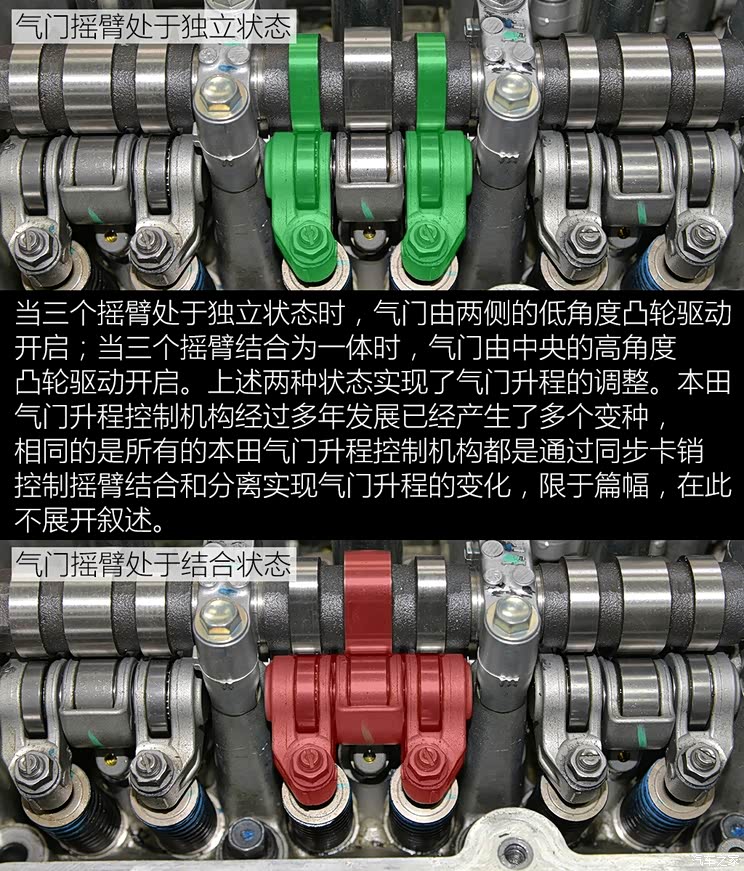
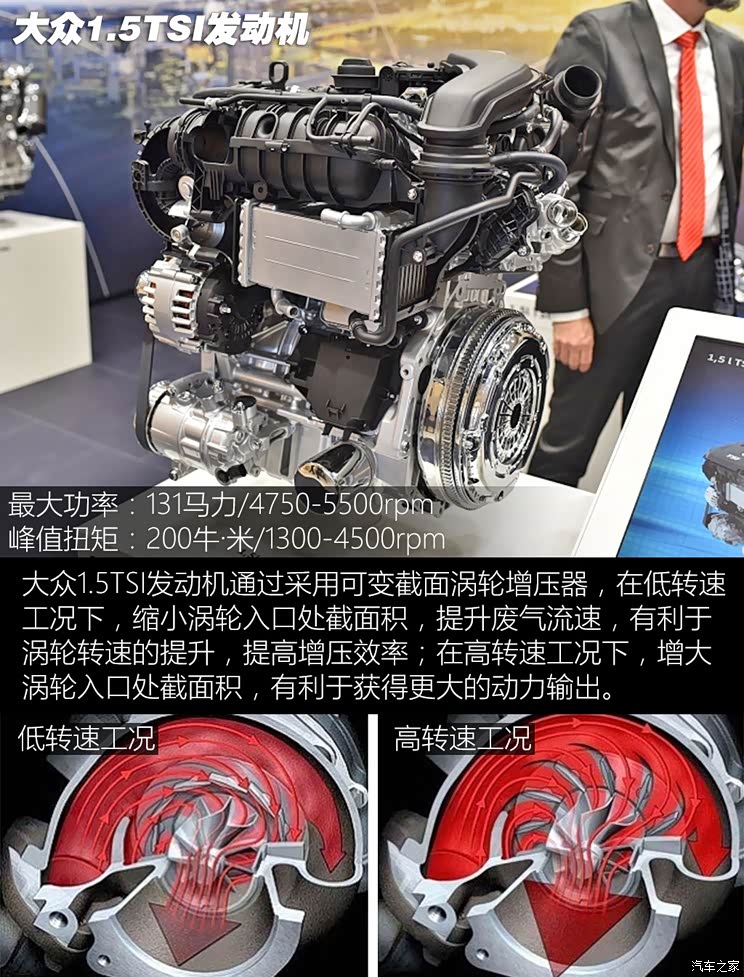
Closer to home, the reason why this 2.0T engine on Crown Road is equipped with a valve lift control system on the exhaust side is closely related to its being a turbocharged engine. Some new turbocharged engines (such as Mazda 2.5T and Volkswagen 1.5TSI) released earlier this year have adopted some measures to promote the scavenging process of cylinders. By promoting cylinder scavenging, waste gas residue can be reduced, cylinder temperature can be lowered, knocking can be suppressed, compression ratio can be improved, and finally power and fuel economy can be improved.
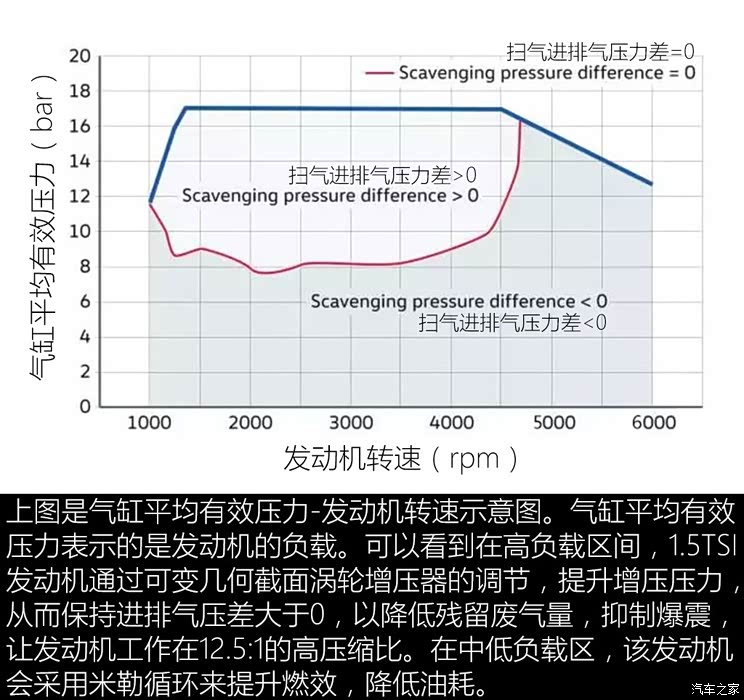
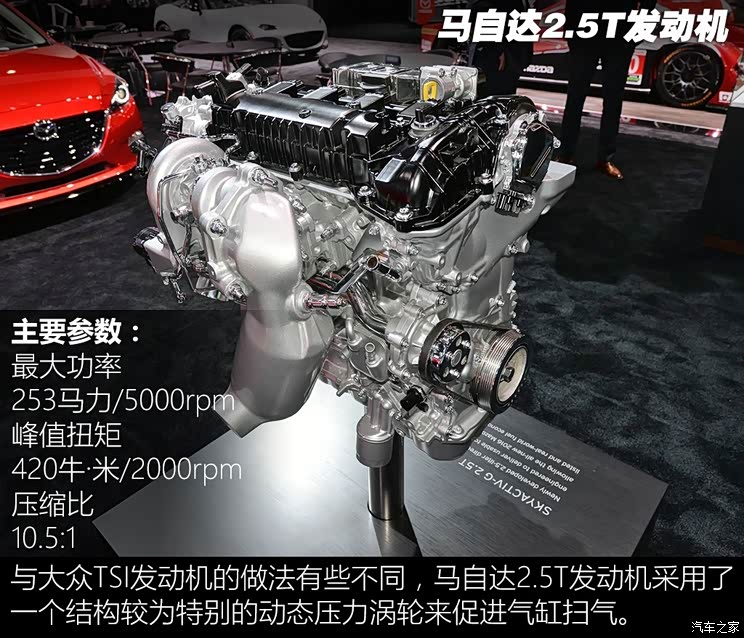
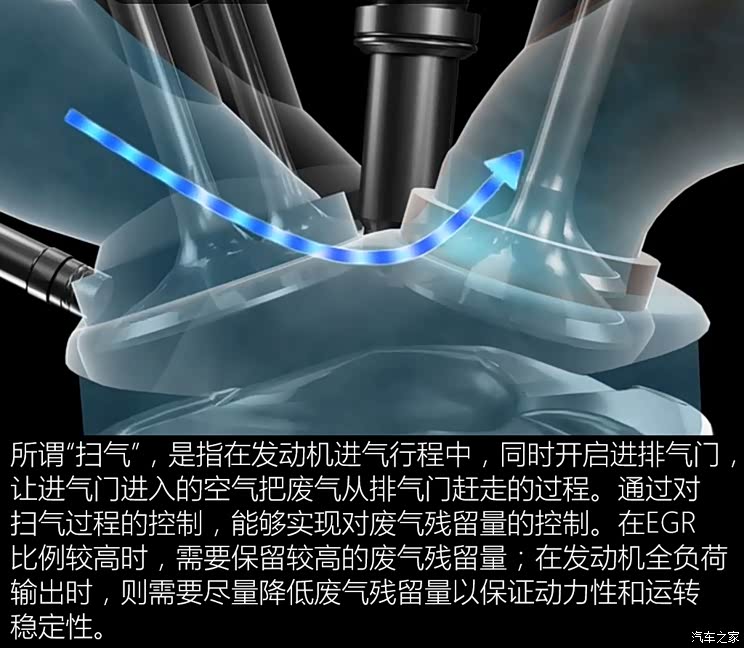
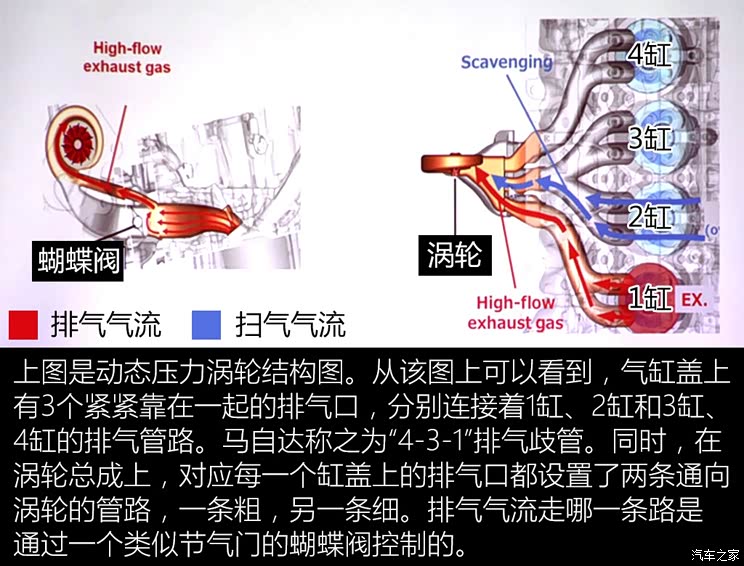
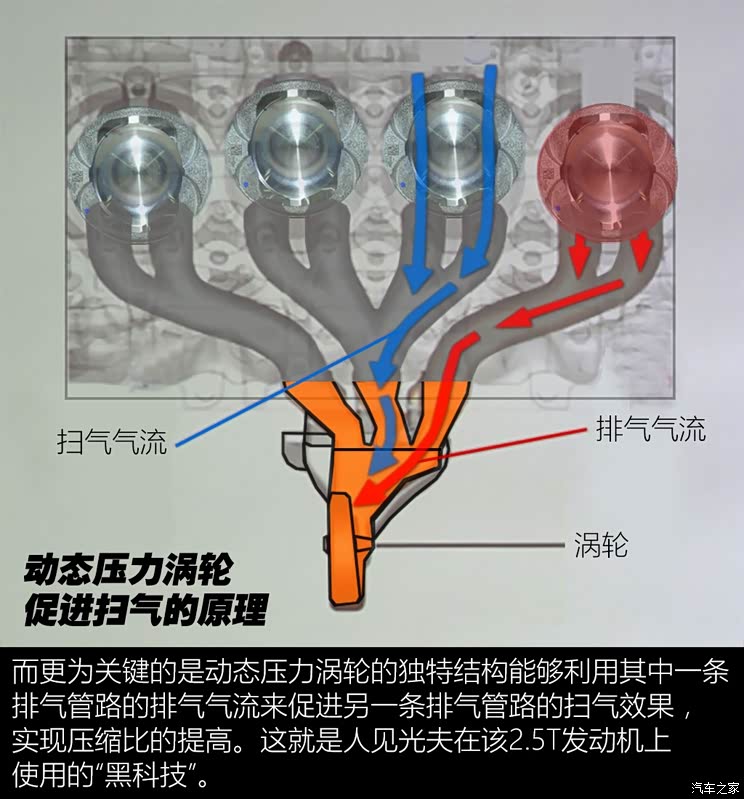
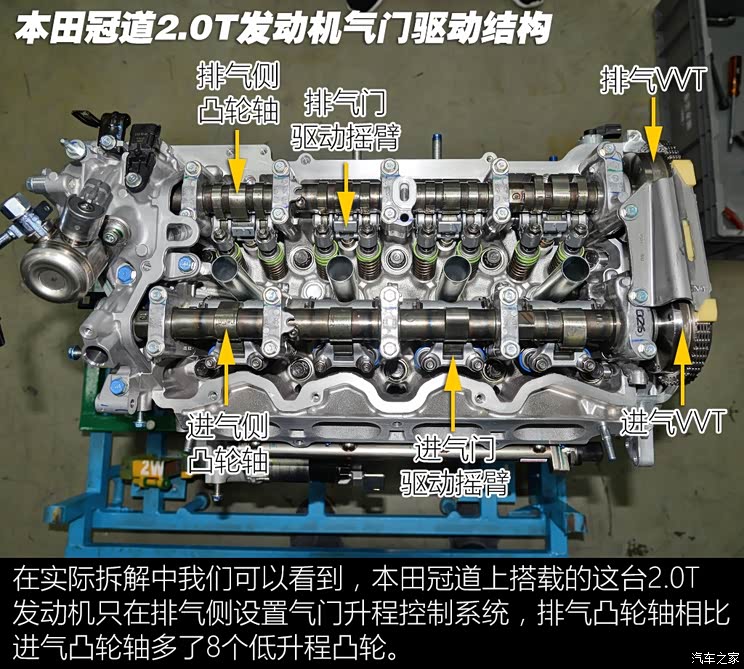
The 2.0T engine on Crown Road is equipped with a valve lift control system for the exhaust valve, and the exhaust resistance is controlled by the change of the exhaust valve opening. From the introduction of Honda engineers, we also know that the exhaust valve lift control system of the engine adjusts the exhaust valve lift according to the engine load.
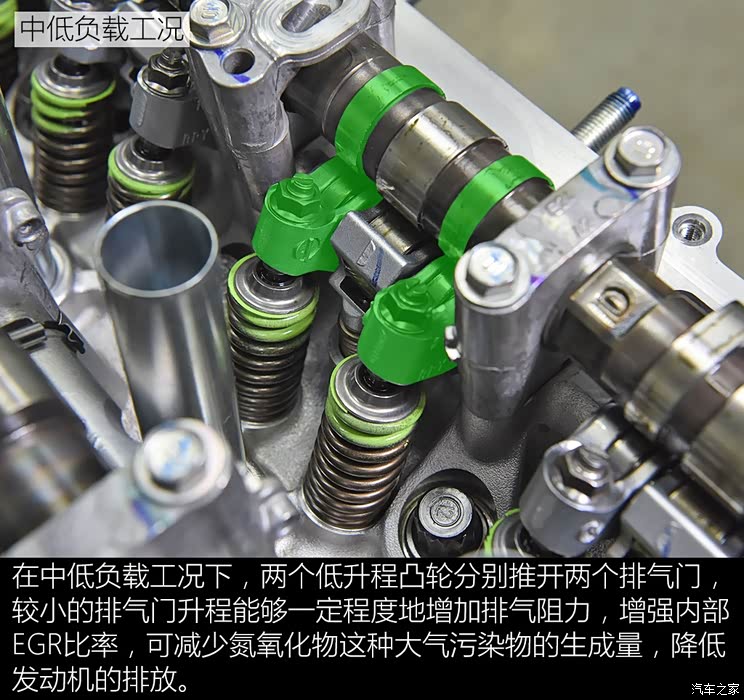
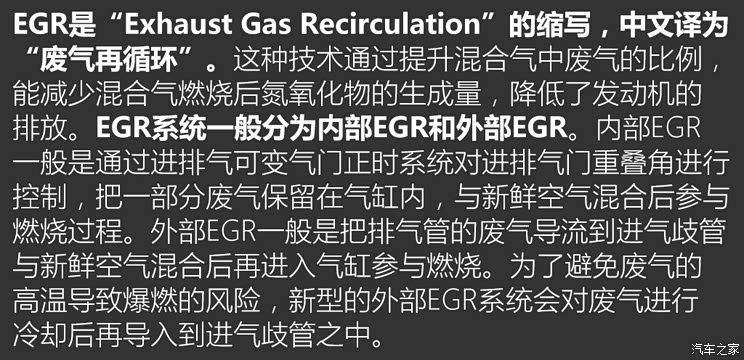
At the same time, the scavenging intensity of the cylinder is dynamically adjusted by using the variable valve timing mechanism of intake and exhaust to ensure that the residual amount of exhaust gas is at an appropriate level, and to avoid the unstable operation of the engine caused by the increase of EGR ratio and residual amount of exhaust gas; In addition, the smaller exhaust valve lift increases the exhaust gas velocity, enhances the exhaust pulse intensity to a certain extent, and is helpful to suppress the turbine hysteresis.
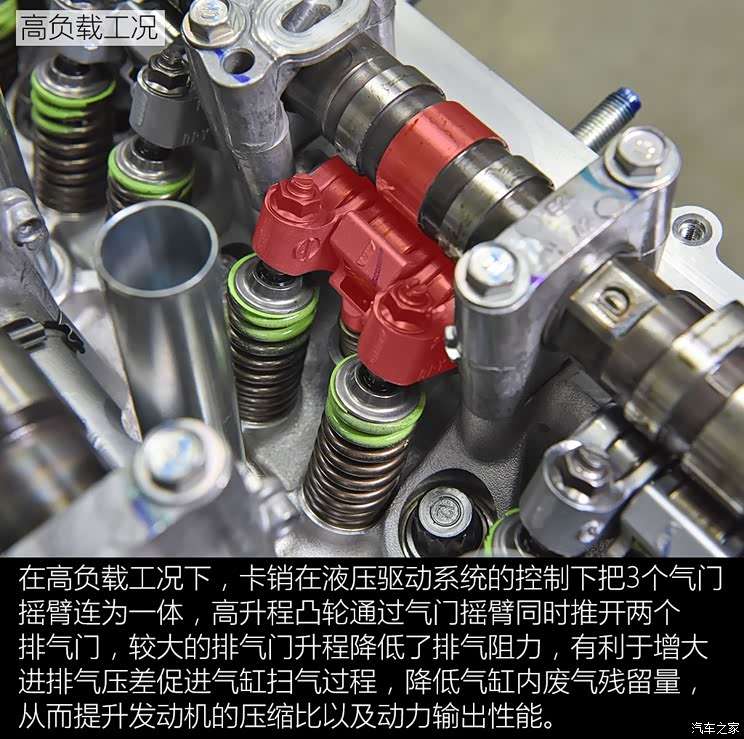
Unlike Volkswagen 1.5TSI engine and Mazda 2.5T engine, this 2.0T engine applied in Honda Crown Road does not adopt a turbocharger with a unique structure to enhance the scavenging effect of the cylinder, but cleverly configures Honda’s unique VTEC valve timing and lift control system on the exhaust side of the engine to control the scavenging effect of the cylinder and the internal EGR ratio under different working conditions, thus improving the emission level and engine performance.
● What is the difference between Crown Road’s 2.0T engine and the fifth generation Civic Type R?
The 2.0T turbocharged in-cylinder direct injection engine with Honda Earth Dream technology was first used on the fourth generation Civic Type R (chassis code "FK2"), and the engine code was "K20C1". The fifth generation Civic Type R (based on the chassis of the tenth generation Civic), which has been exposed to spy photos before, is equipped with a 2.0T engine code-named "K20C3". The model of the 2.0T engine on the crown road is also "K20C3". Is the engine on the fifth generation Civic Type R the same as the engine on the crown road?
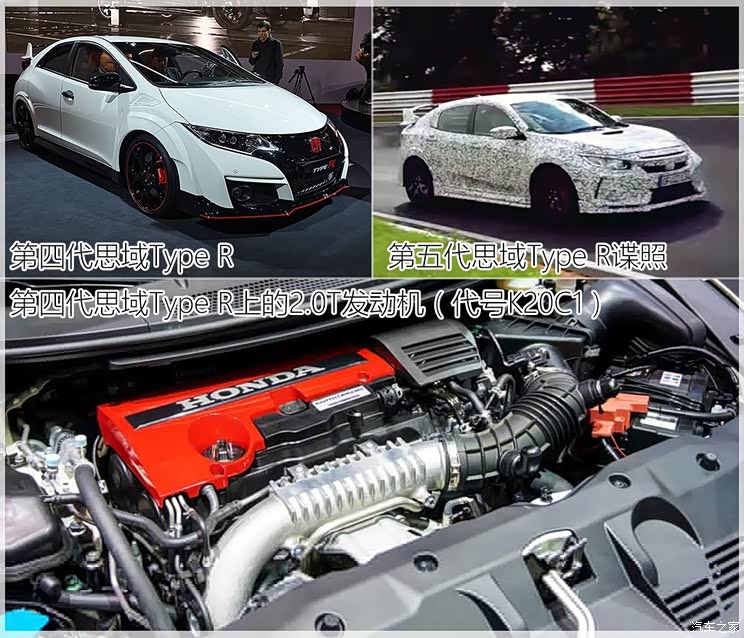
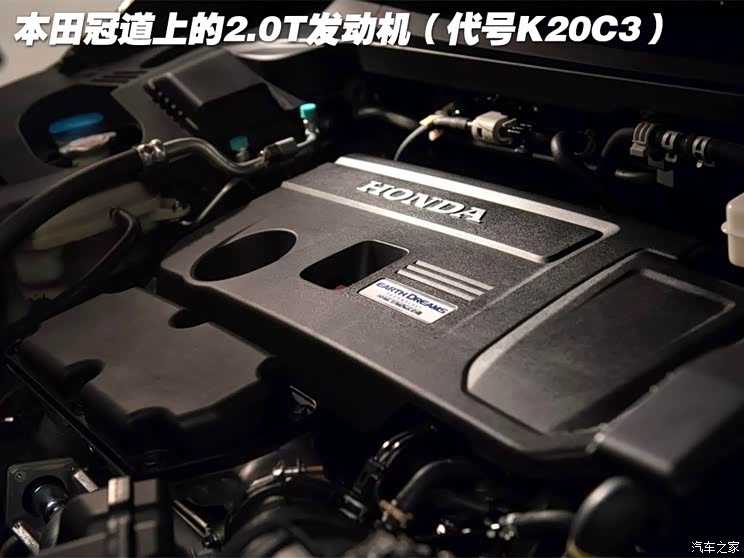
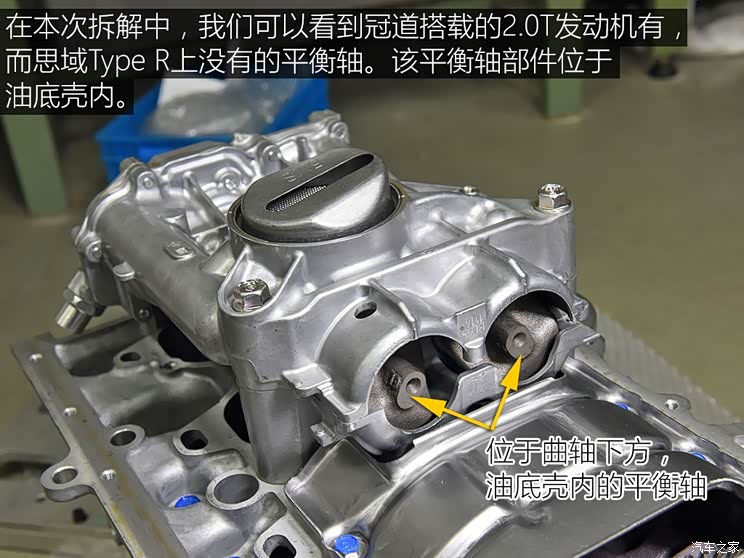
In order to get the answer to the question, we specially consulted an engineer from Honda Research Institute in Japan. According to the engineer’s introduction, the basic hardware of the 2.0T engine on the Crown Road and the fifth generation Civic Type R is the same, such as cylinder block, piston, connecting rod, crankshaft and other components. The biggest difference between the 2.0T engines on the two models is that the 2.0T engine on the crown road is equipped with a balance shaft that can offset the reciprocating inertia moment of the piston, while the 2.0T engine on the fifth generation Civic Type R is not equipped, in order to further reduce the internal running resistance and improve the power output.
There are also some differences in the maximum supercharging values of the turbocharging systems of the two cars, and the maximum supercharging pressure of the fifth-generation Civic Type R, which focuses on power performance, will be higher.
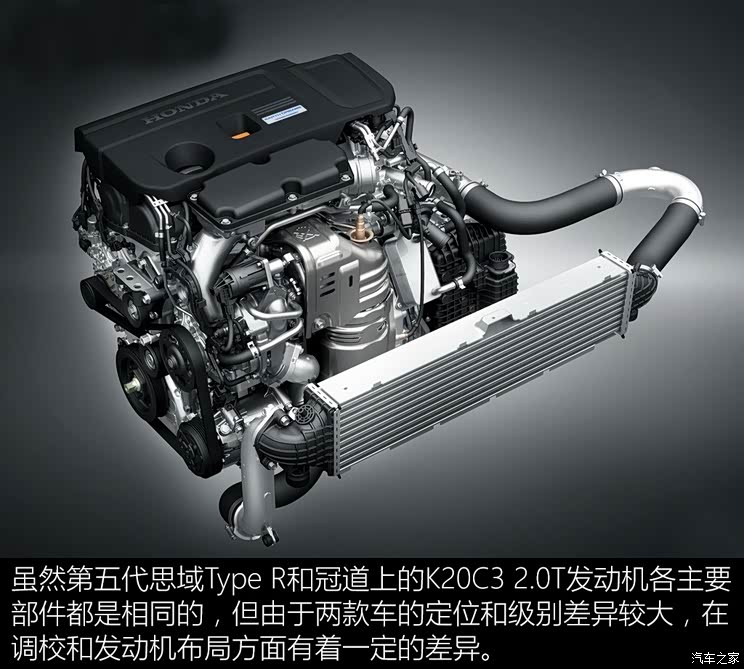
Crown Road and the fifth-generation Civic Type R are two different types of cars, and the engine compartment space is quite different, so the engine intake and exhaust pipes are adjusted according to different models. However, the intercooler parts (parts that cool the pressurized air) of the two cars are the same.
● We will see more Honda’s black technology in disassembly.
Above, we have revealed the difference between the 2.0T engine on Honda Crown Road and the 2.0T engine on the fifth generation Civic Type R, and the reason why VTEC valve lift control system is arranged on the exhaust side. Next, we will begin the formal disassembly and explore more unknown black technologies of this engine.

● Air intake, oil supply and ignition system
Honda’s K20C3 2.0T engine is the second turbocharged direct injection engine that Honda put into China market after L15B9 1.5T engine. Let’s start with the air intake, oil supply and ignition system!
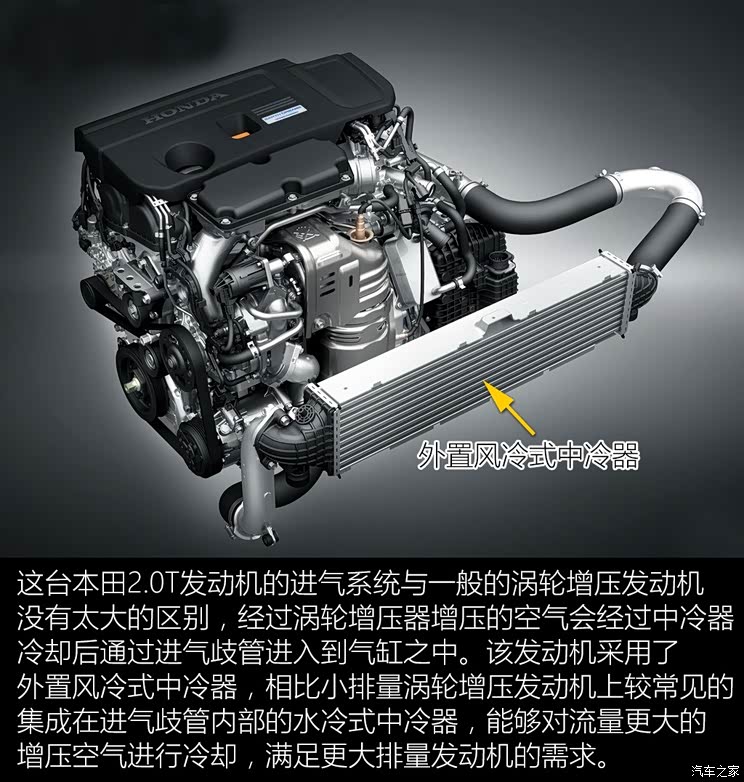
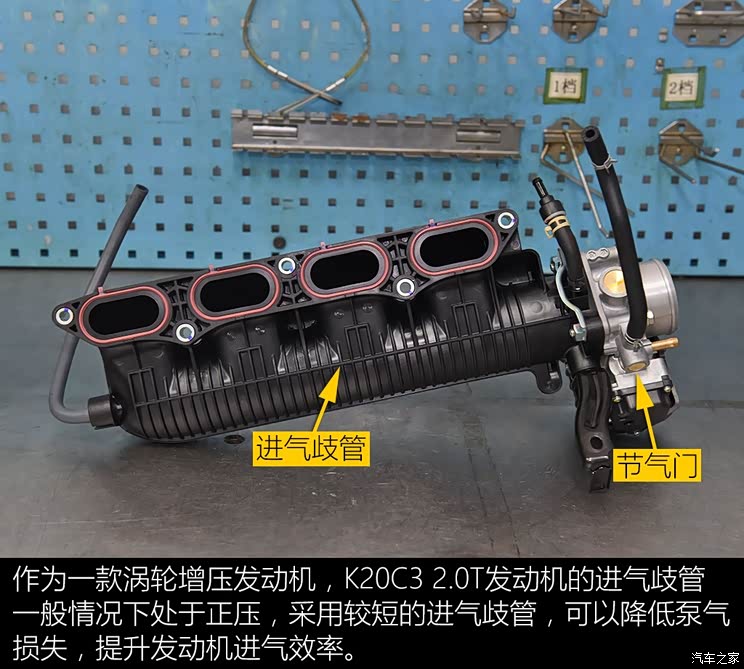
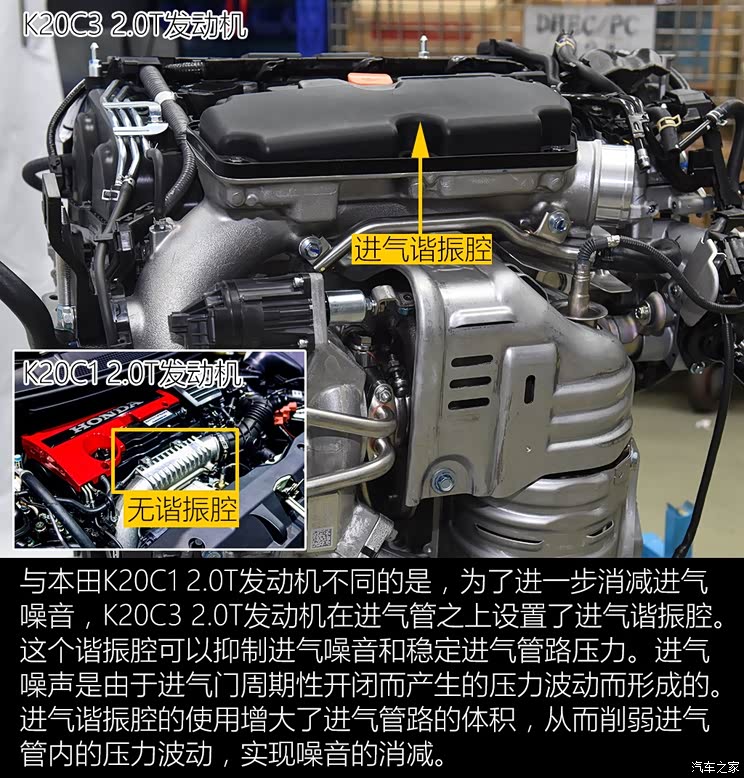
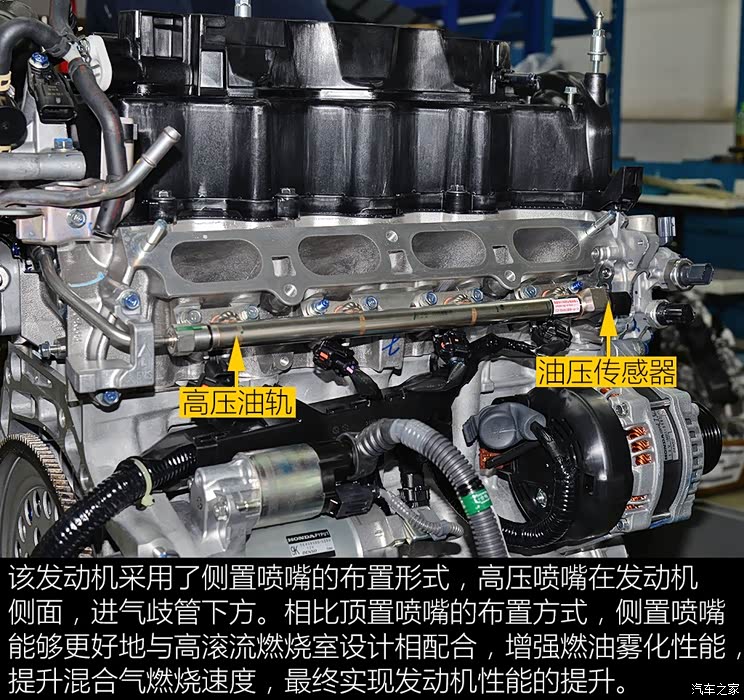
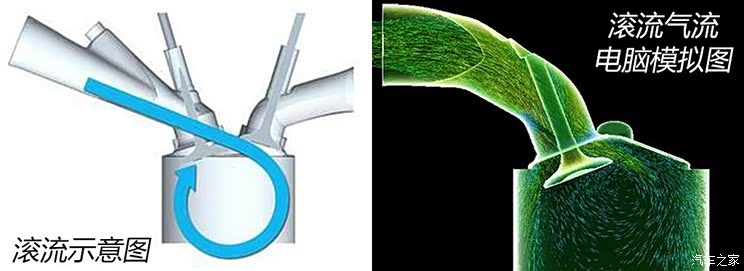
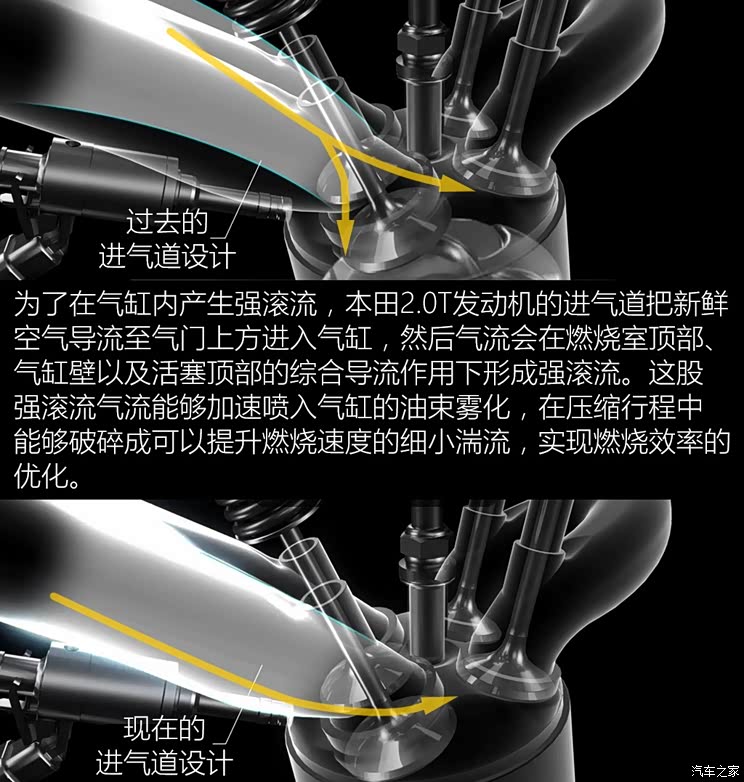
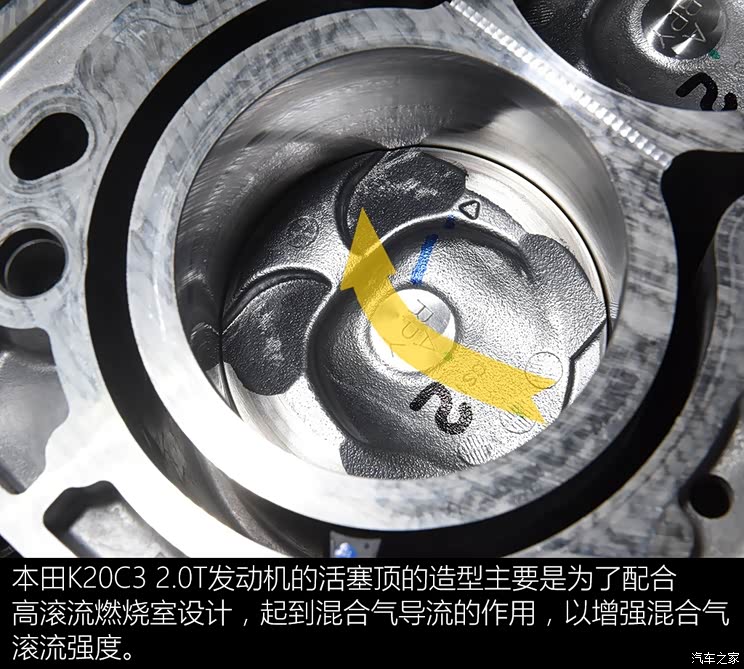
At present, most new turbocharged gasoline engines on the market will adopt a design called high tumble combustion chamber. This design enhances the tumble strength of fresh air entering the cylinder by optimizing the inlet angle and the shape of the cylinder inlet. Creating strong tumble flow in the intake stroke can improve the combustion efficiency of the engine, thus reducing the fuel consumption rate.
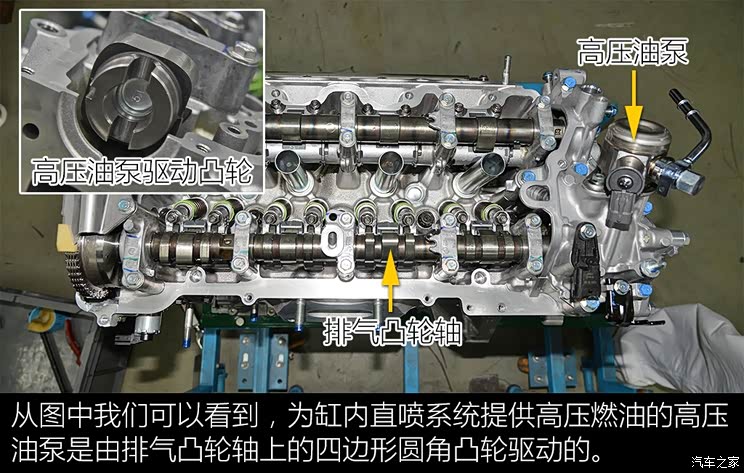
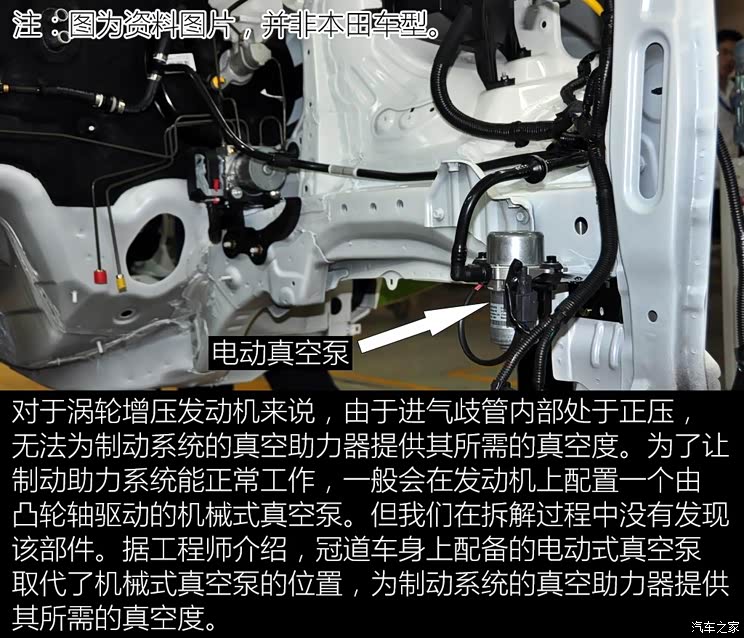
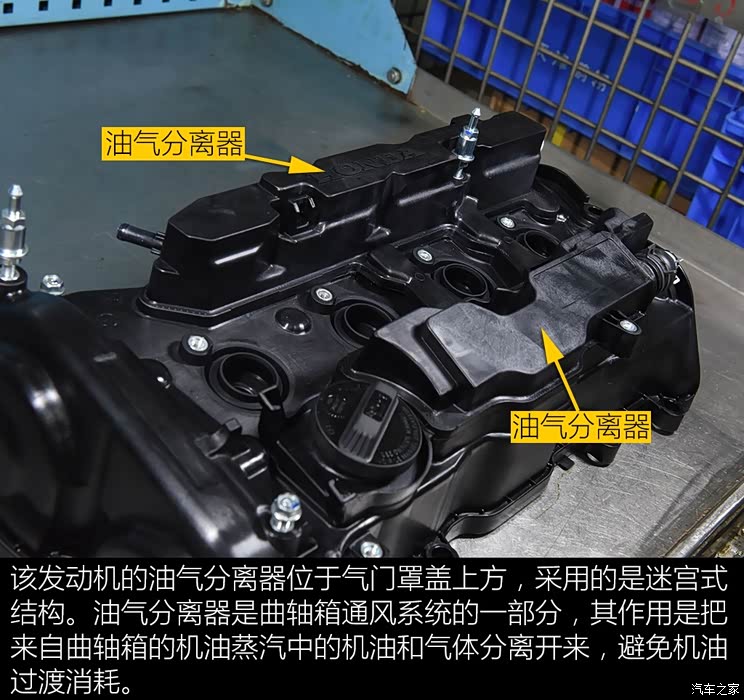
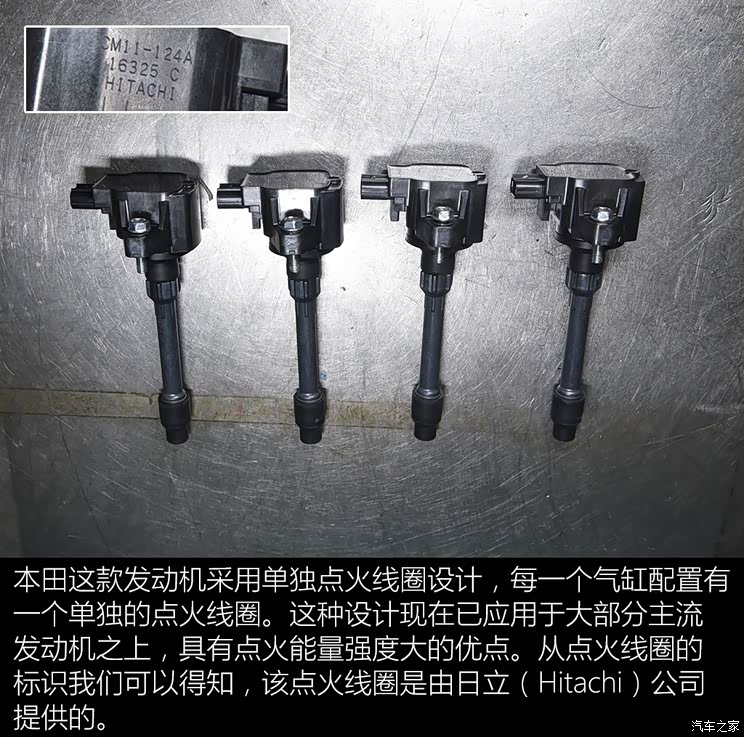
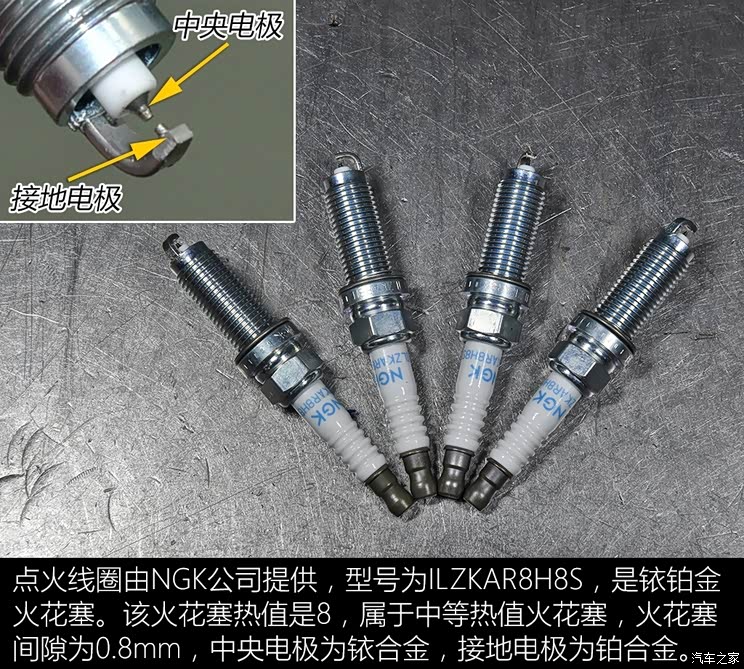
If you are not familiar with the parameters of the spark plug, I recommend you to read the Practical Technical Manual (4) Spark plug technical secrets, through which you can learn more practical knowledge about spark plugs.
● VTEC valve timing and lift control system
As a patented technology of Honda, VTEC valve timing and lift control system must be paid attention to every time Honda engine is disassembled. As we have already mentioned, the reason why Honda will set up a valve lift control system on the exhaust side of this K20C3 2.0T engine is mainly to control the scavenging effect of the cylinder and the internal EGR ratio, so as to improve the emission level and engine performance. Let’s take a closer look at the structure of VTEC valve timing and lift control system through disassembly.
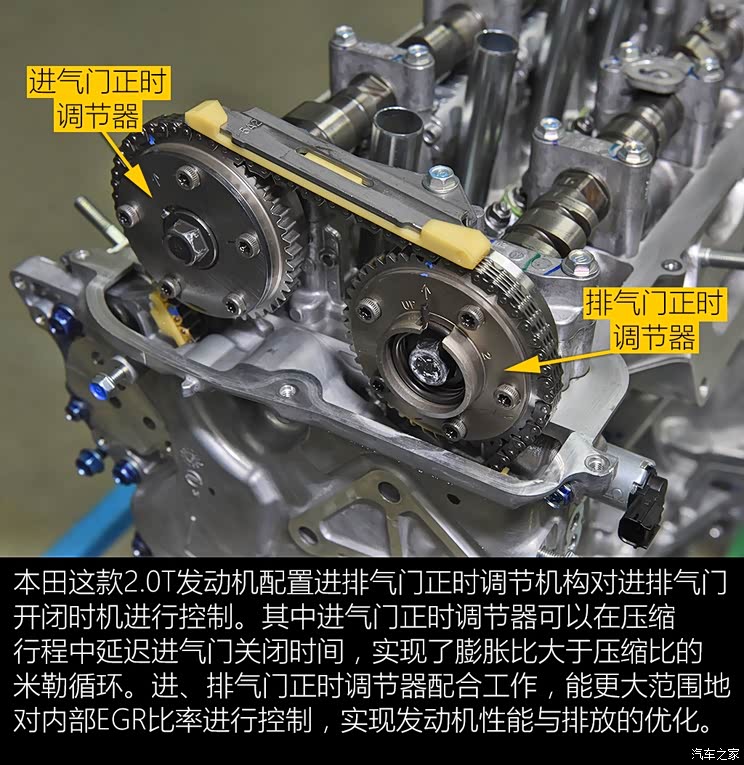
The Miller cycle working mode of the engine is involved in partial load condition, with the purpose of improving fuel economy by using the Miller cycle working mode with high thermal efficiency. Under medium and low load conditions, the scavenging intensity of the cylinder is controlled by the intake and exhaust valve timing regulator to ensure that the internal EGR ratio is within a reasonable range and avoid the unstable operation of the engine due to excessive exhaust gas residue. For more explanation of Miller cycle working mode, please refer to the introduction of "Secret Disassembly of Blue Sky 2.0L Engine with High Compression Ratio".
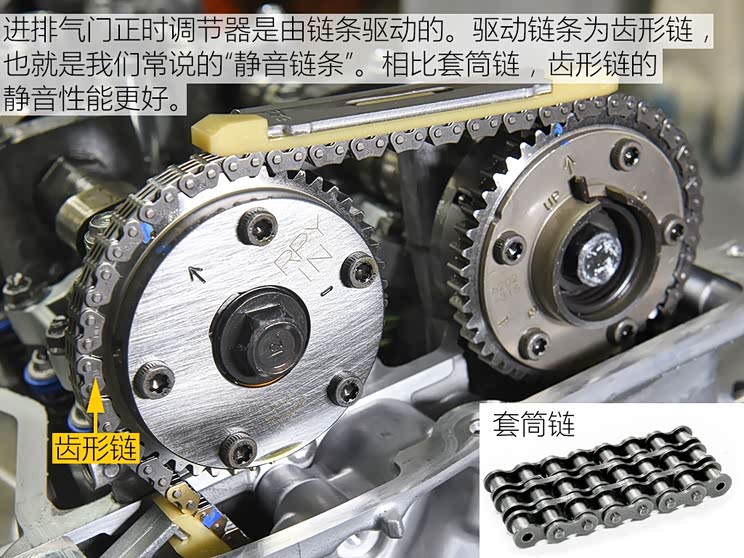
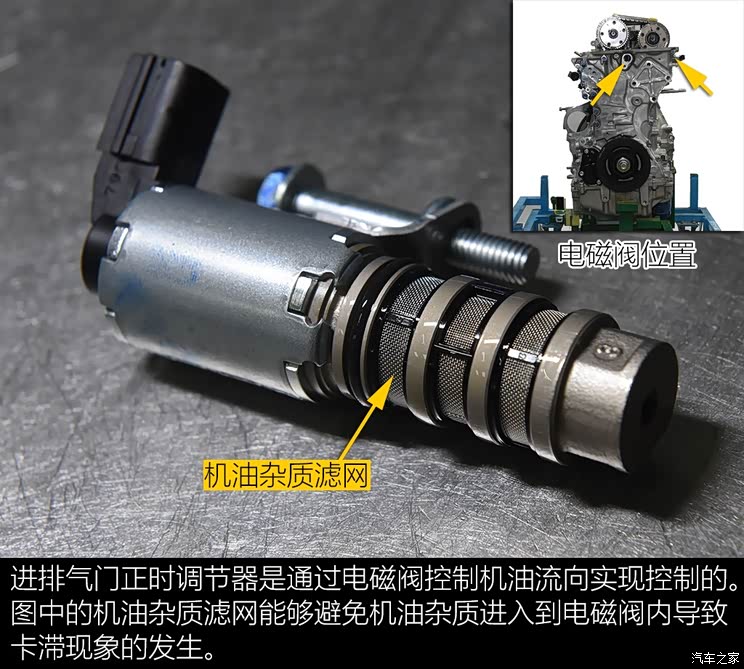
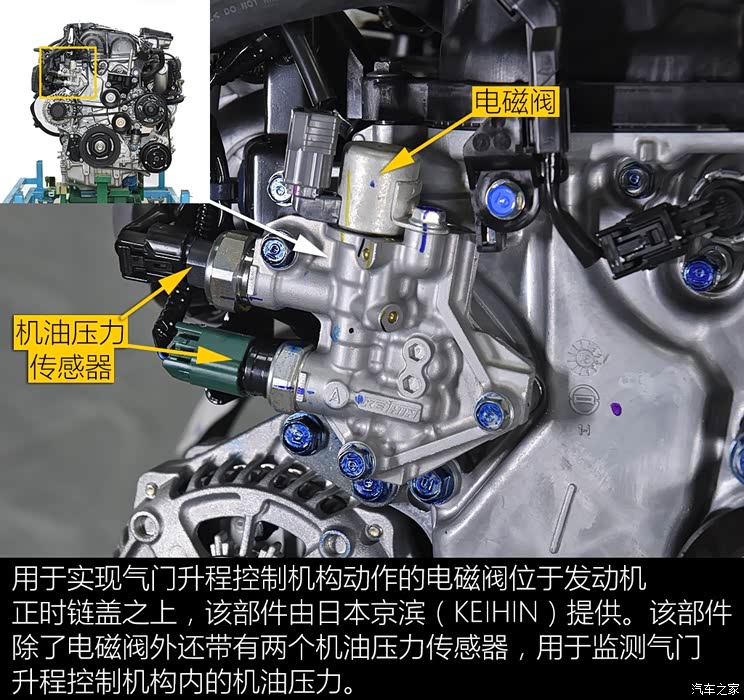
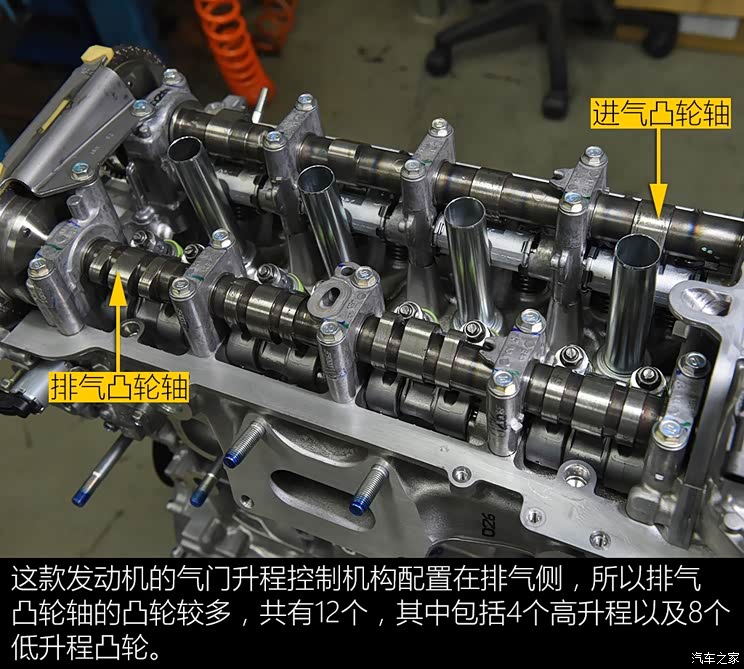
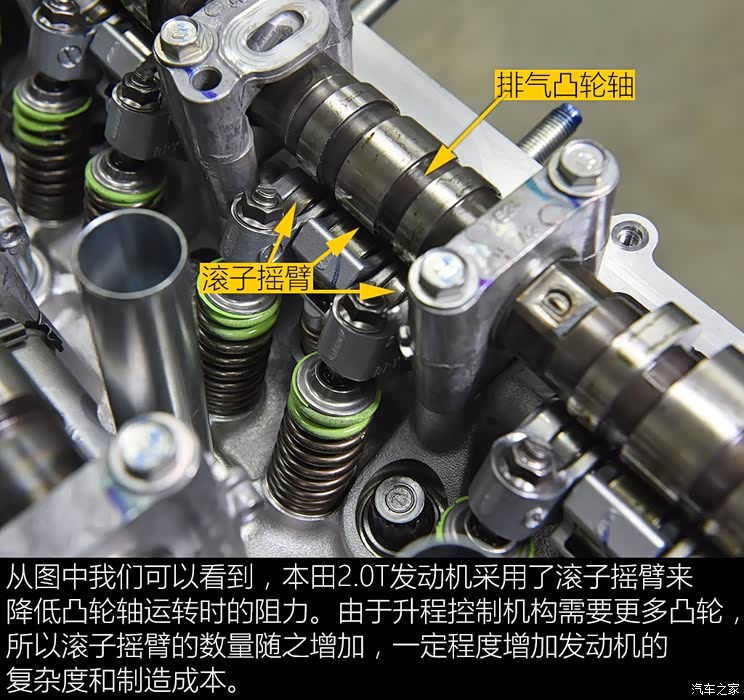
Although Honda’s valve lift control systems used in different types of engines are similar in structure, their functions are different. Honda introduced a valve lift control system on the exhaust side of this K20C3 2.0T engine, in order to reduce engine emissions, improve exhaust gas flow rate and suppress turbine lag under medium and low load conditions. Under the condition of high load, the exhaust resistance is reduced and the power output of the engine is improved.
● Integrated exhaust manifold and turbocharger
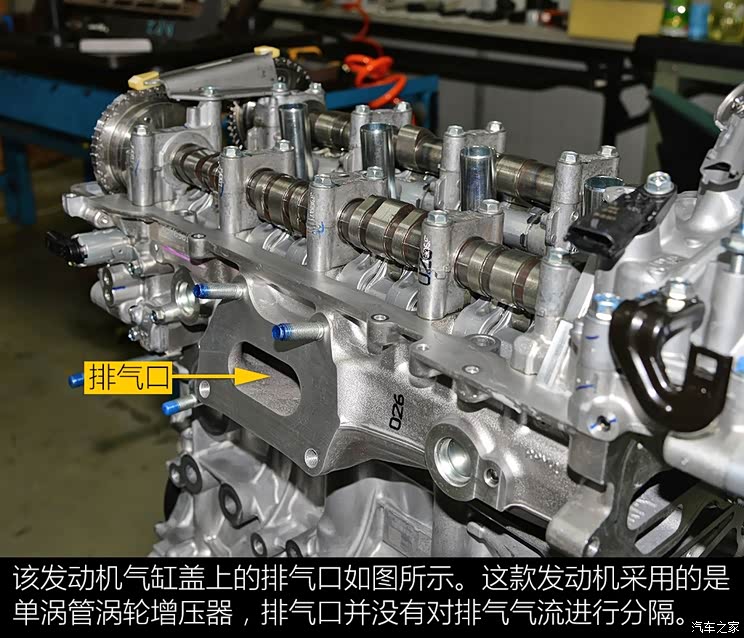
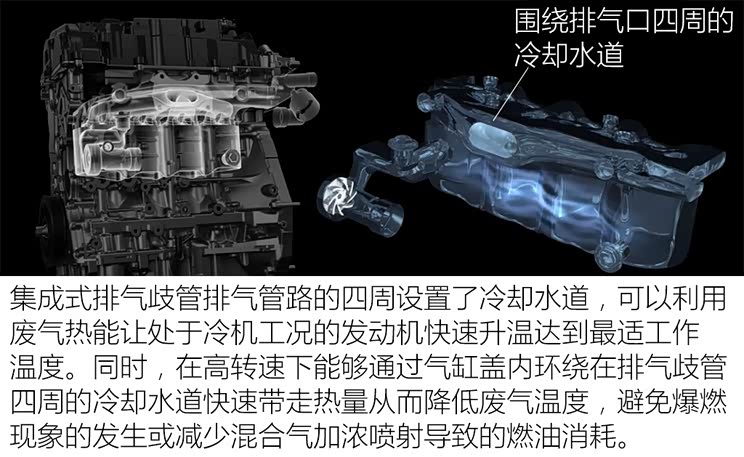
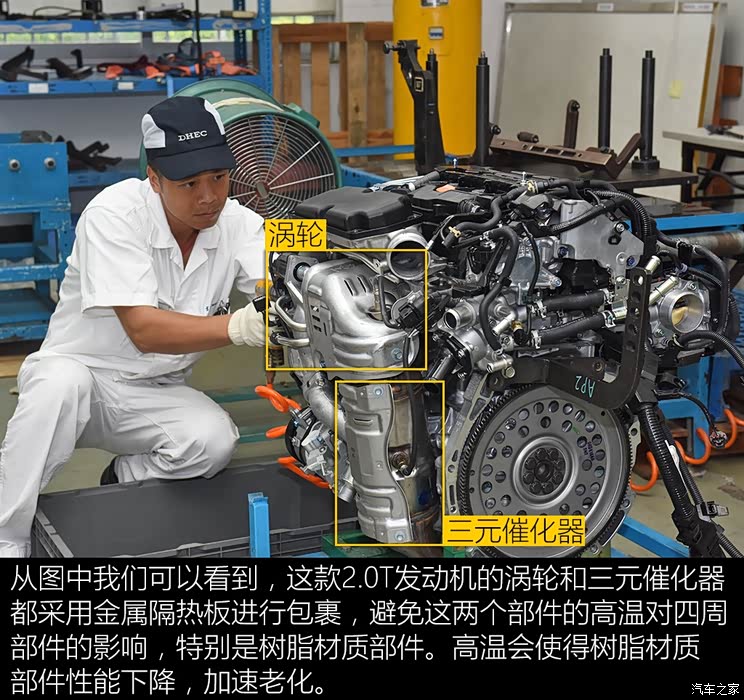
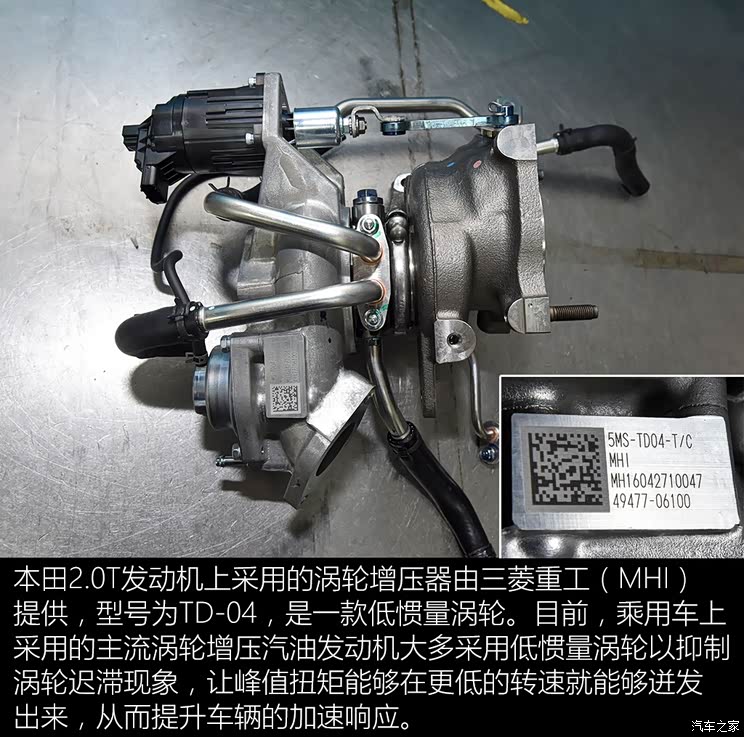
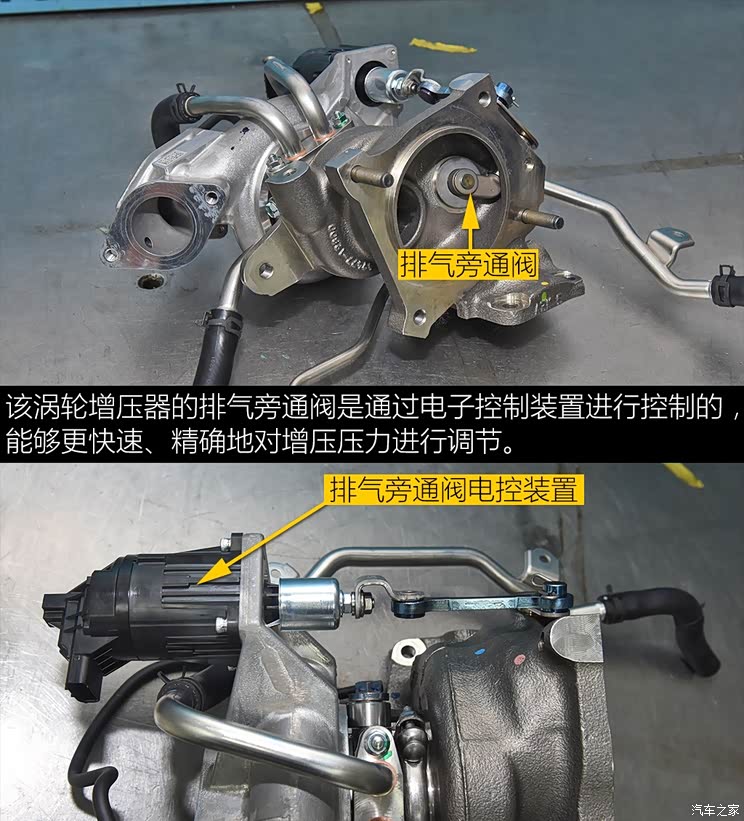
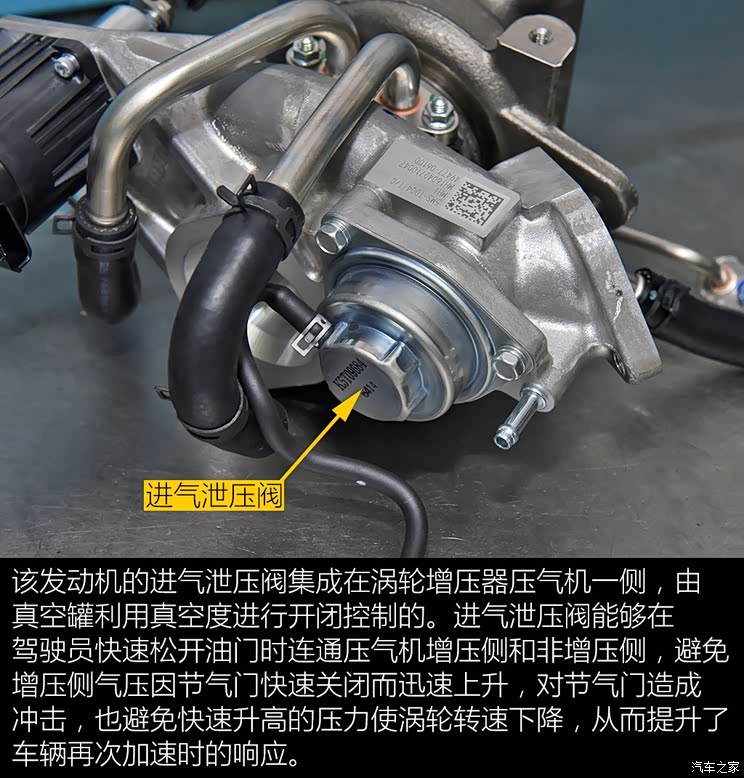
Like many mainstream turbocharged in-cylinder direct injection engines, Honda 2.0T engine also adopts the design of integrating exhaust manifold in the cylinder head. The integrated exhaust manifold technology can make the engine in cold working condition quickly heat up to the optimal working temperature; At high speed, the heat can be quickly taken away by the water jacket around the exhaust manifold in the cylinder head, thus reducing the exhaust temperature, avoiding the occurrence of deflagration or reducing the fuel consumption caused by enriched injection of mixed gas.
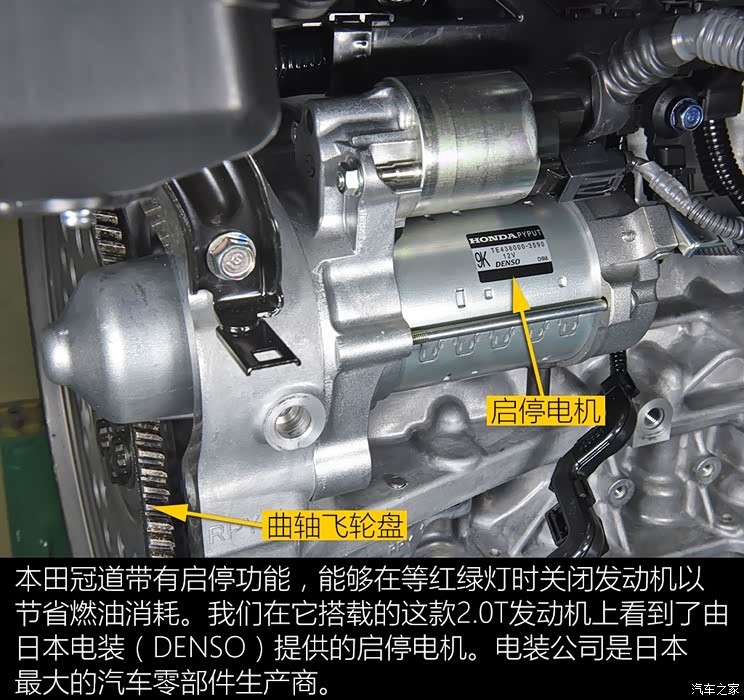
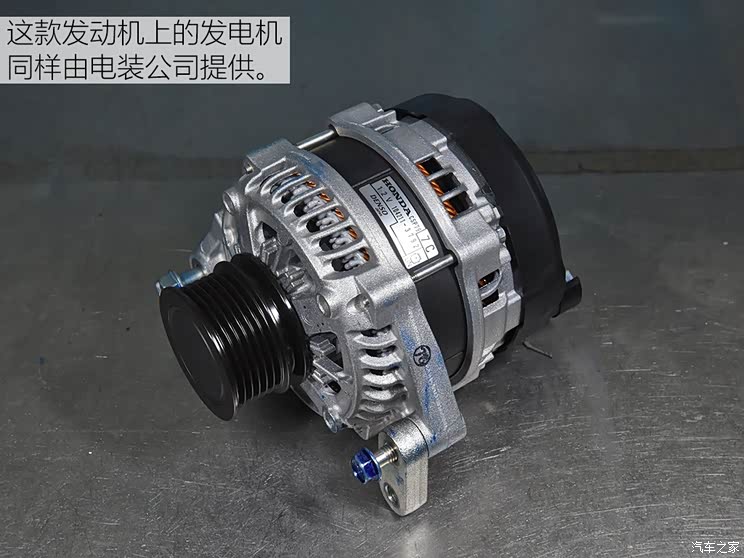
● Water pump/air conditioning compressor/generator/start-stop motor
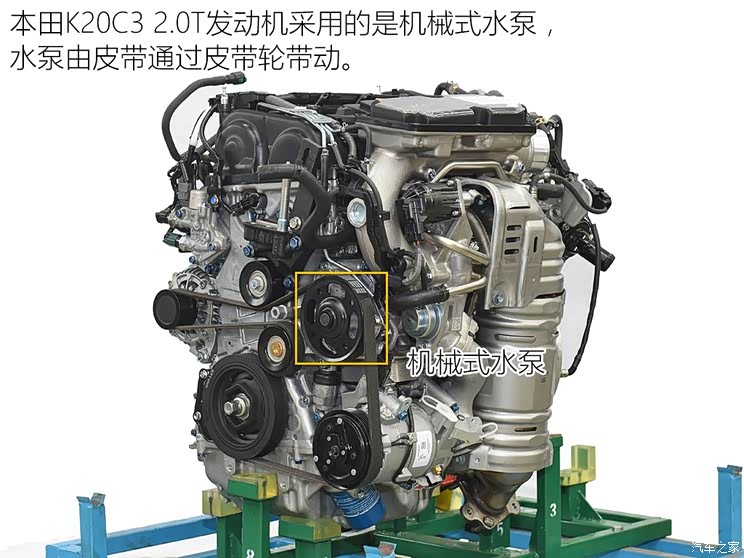
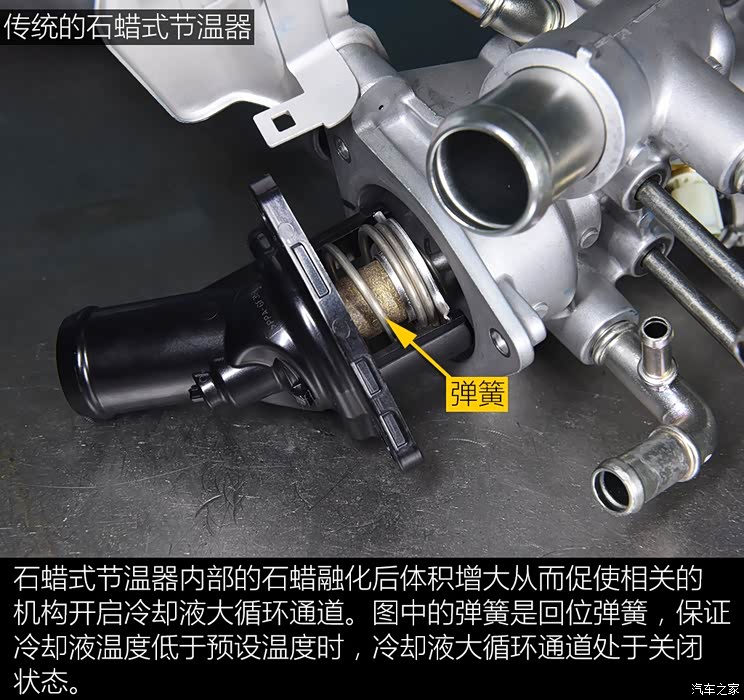
Honda K20C3 2.0T engine uses a relatively traditional mechanical water pump. Moreover, the engine is still a traditional paraffin thermostat used to control the size cycle of the cooling system. When the coolant temperature reaches a certain level, the paraffin thermostat will act to switch the cooling system from small circulation to large circulation mode.
● Balance shaft for counteracting vibration
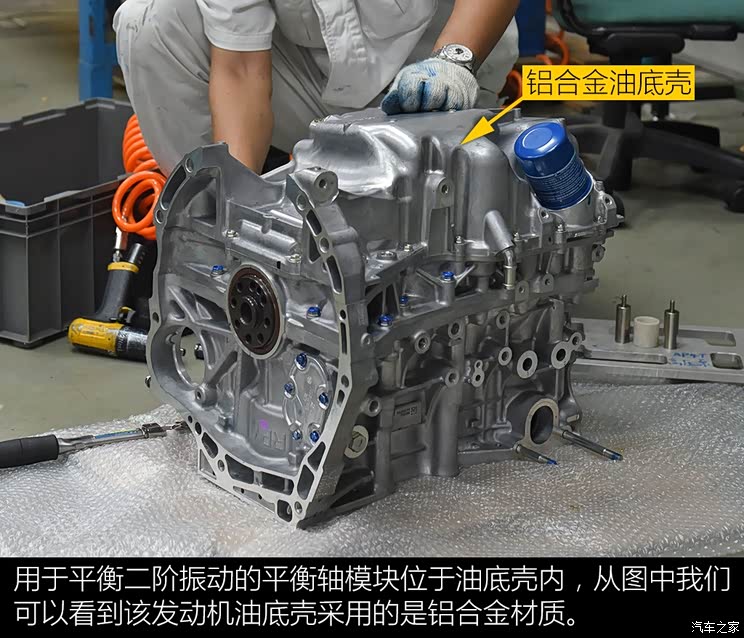
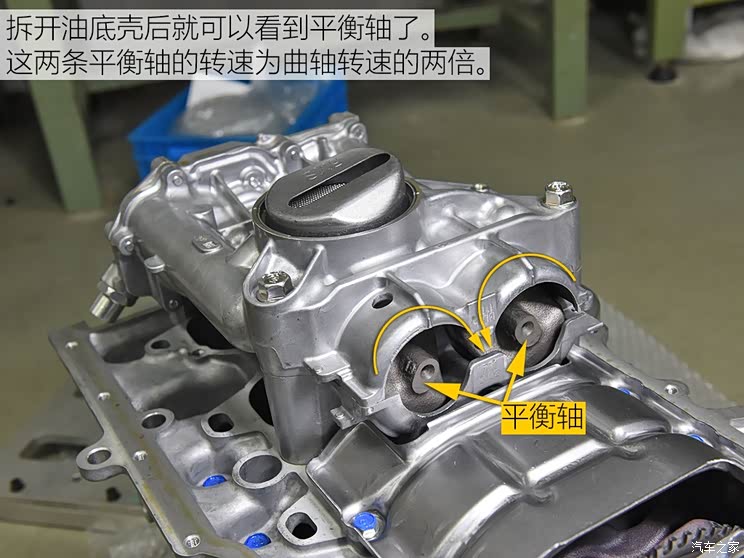
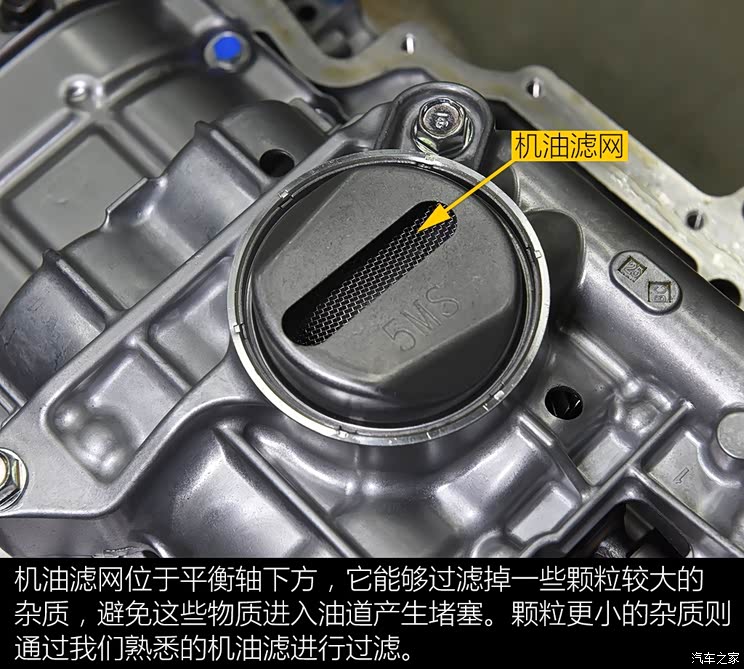
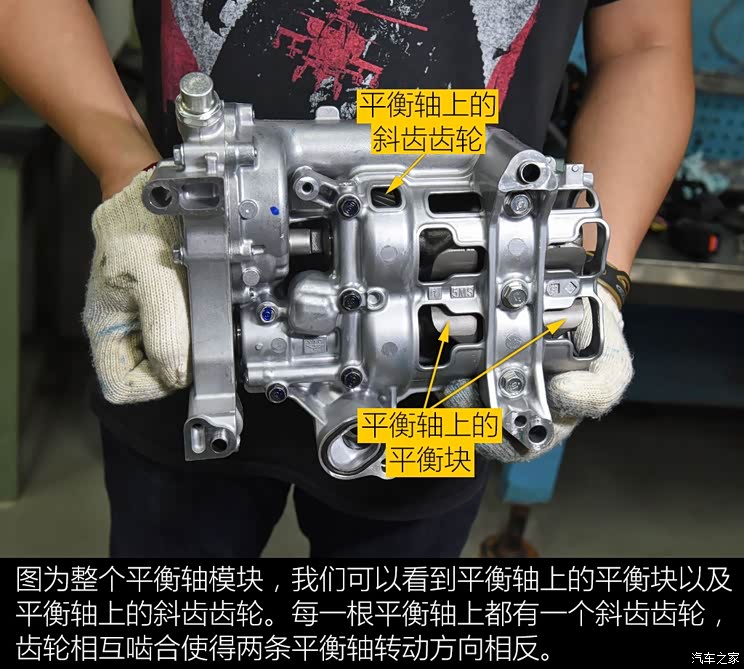
According to the principle of the engine, the ideal in-line four-cylinder four-stroke engine mainly has the second-order reciprocating inertia force imbalance compared with the parts connected with the engine. In order to counteract the above-mentioned second-order reciprocating inertia force and further improve the running stability of the engine, the bottom of the 2.0T engine is designed with two balance shafts with opposite rotating directions and twice the rotating speed of the crankshaft. The so-called second-order vibration of the engine means that the vibration frequency is twice that of the engine speed.
More exciting videos are all on the car home video platform.
Demonstration video of balance shaft rotation of Honda 2.0T engine.
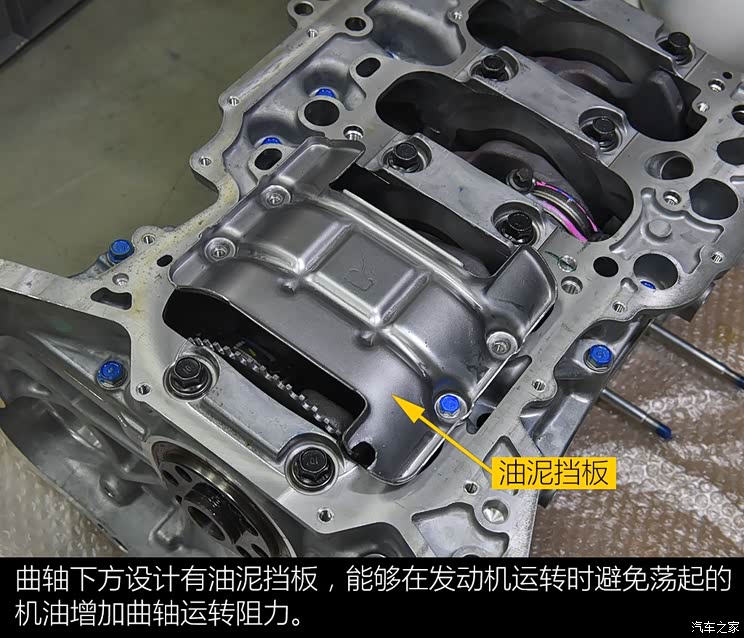
Not all in-line four-cylinder engines will have a balance shaft inside the engine that can counteract the second-order vibration. The reason why Honda K20C3 2.0T engine has a balance shaft in the engine is mainly due to the high positioning of this engine-loaded model and higher requirements for engine ride comfort.
● Split design to make the cylinder more "solid"
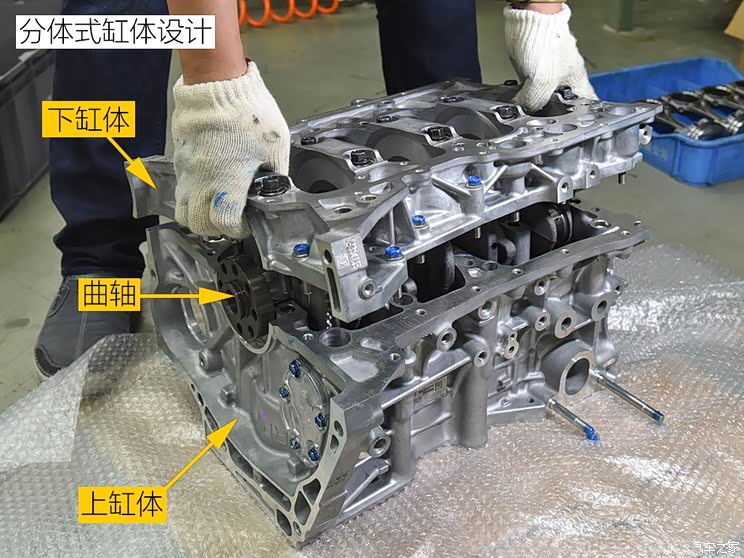
The cylinder block of Honda 2.0T engine adopts split design, which has better rigidity compared with the gantry cylinder block design, and has a positive effect on restraining the vibration generated when the engine works.
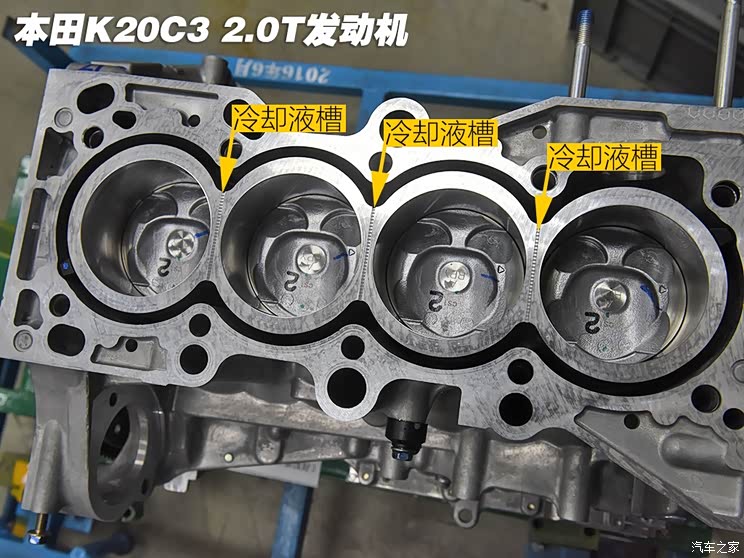
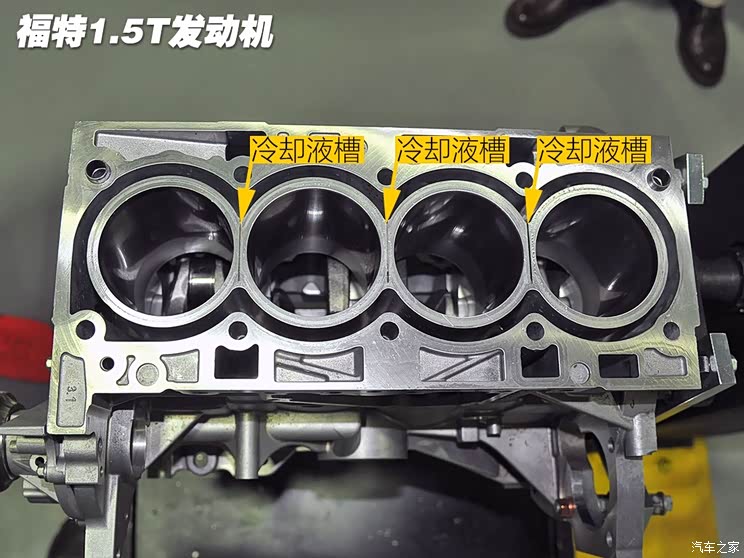
We can see that the coolant tank is designed between the cylinders of Honda 2.0T engine, and we can also see the same design on Ford 1.5T engine. These coolant tanks are specially designed to reduce the temperature at the top of the cylinder. The heat accumulated on the exhaust side of the cylinder can be quickly taken away by the flowing coolant, which can effectively avoid the occurrence of premature combustion or knocking and improve the ride comfort of the engine.
● The cooling oil passage makes the piston no longer "have a fever"
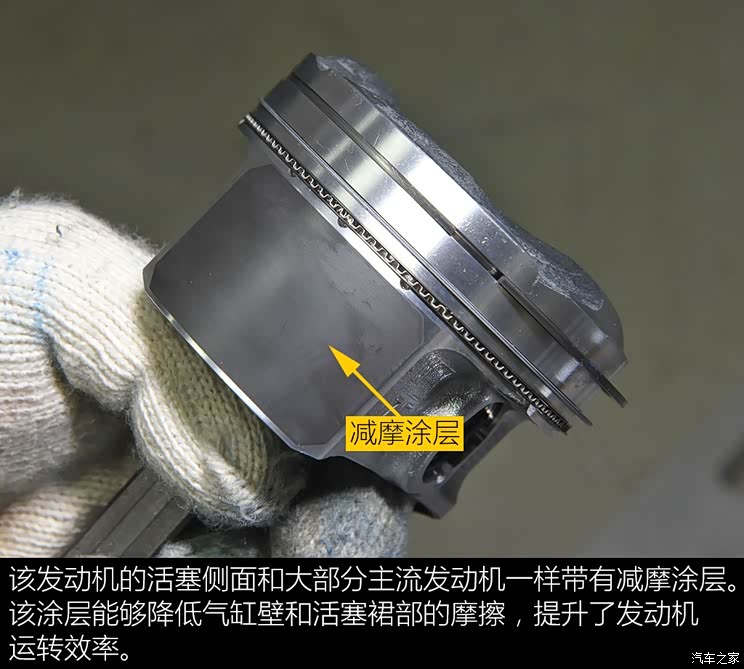
The piston of Honda 2.0T engine is not only coated with common antifriction coating on the side, but also equipped with lubricating oil cooling gallery inside the piston, which can reduce the temperature of the piston top from the inside by flowing lubricating oil, thus reducing the temperature of the combustion chamber.
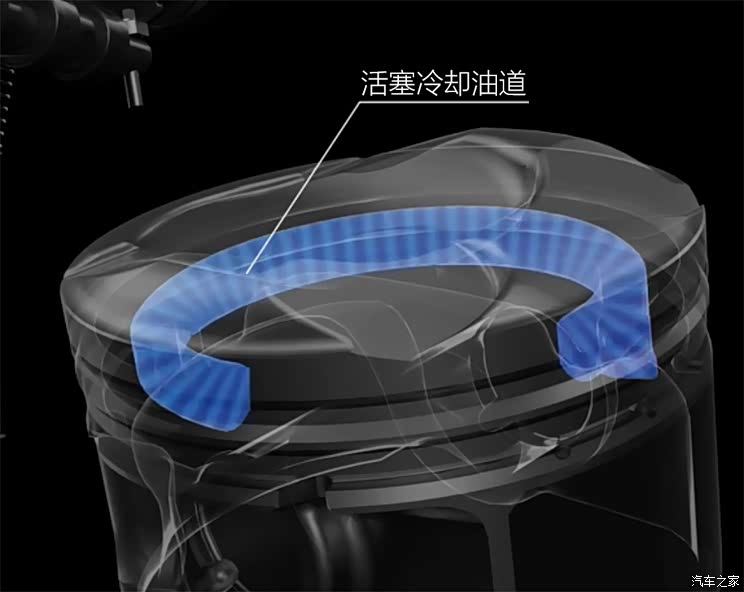
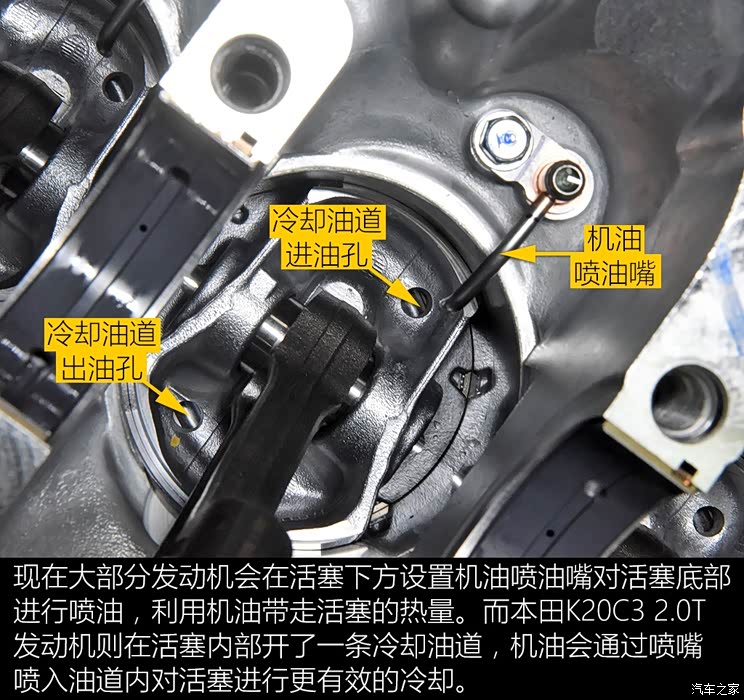
We can see that there are two round holes at the bottom of the piston, which are the oil inlet and oil outlet of the cooling oil passage. The lubricating oil in the lubricating oil gallery is injected into the cooling oil gallery through the lubricating oil nozzle located at the bottom of the cylinder block. The oil flowing through the piston can take away the heat of the piston more effectively and reduce the working temperature of the piston.
● Piston/connecting rod/crankshaft
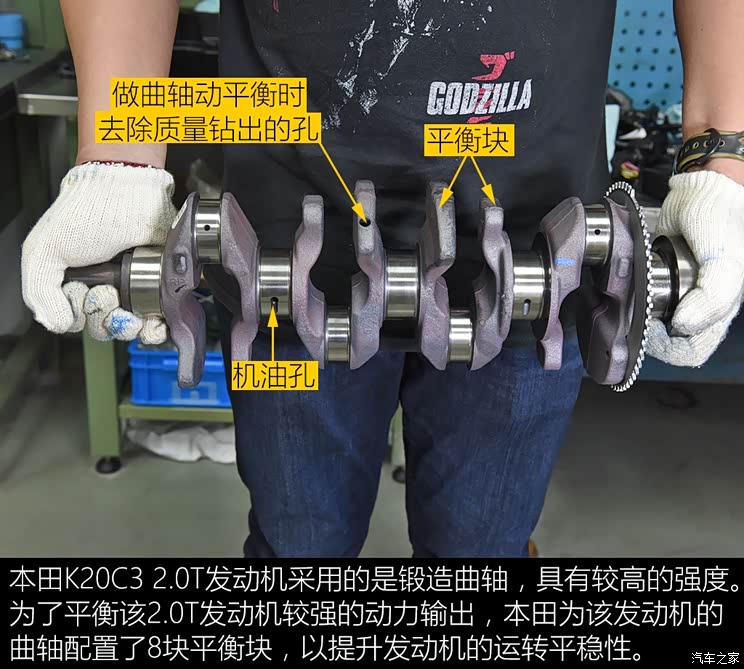
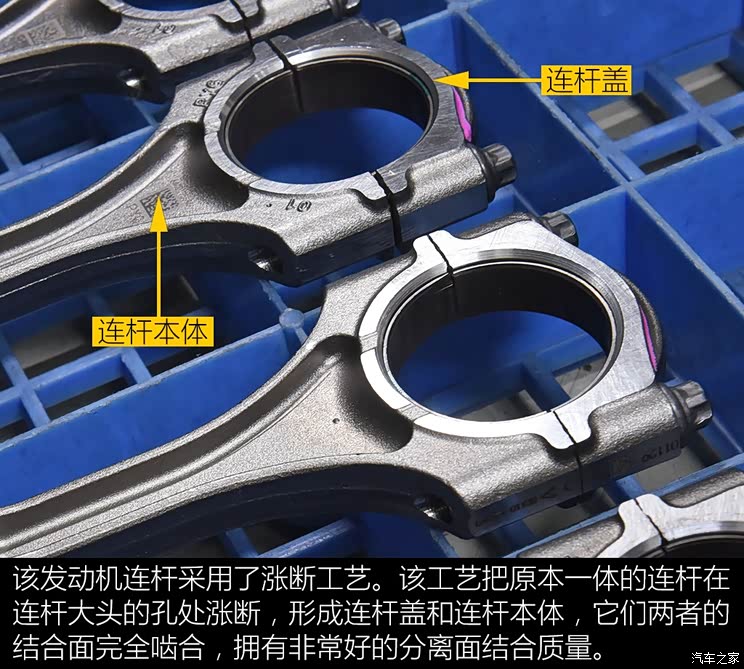
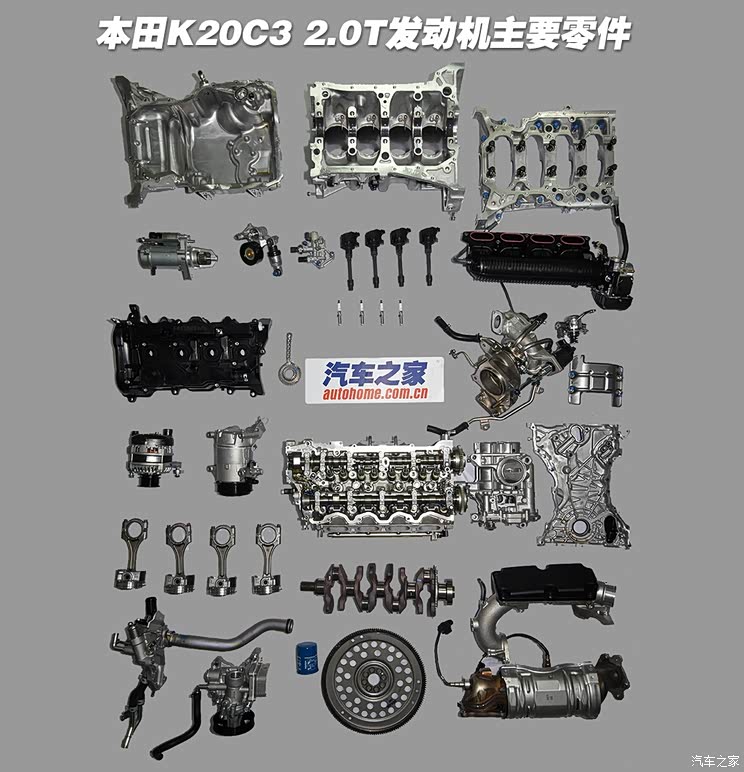
Crank-connecting rod mechanism is the main movement mechanism in the engine, and its function is to convert the reciprocating motion of the piston into the rotating motion of the crankshaft, and at the same time, to convert the torque acting on the piston into the torque output by the crankshaft to drive the automobile wheels to rotate. The strength and balance measures of crank-connecting rod mechanism are of great significance to engine life and running smoothness.
Full text summary:
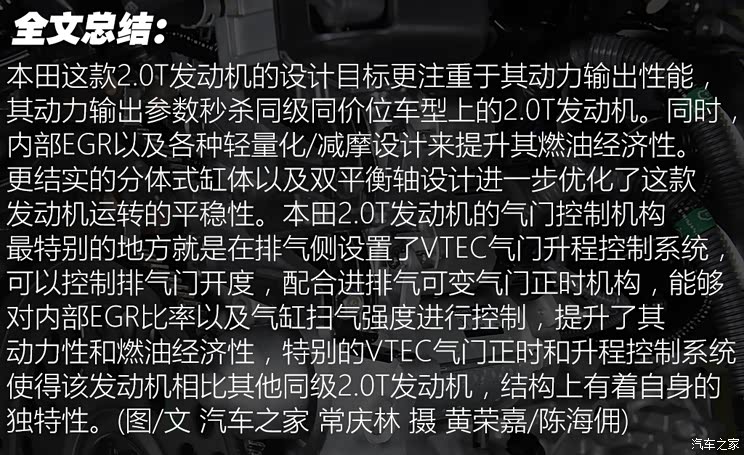
The design of high tumble combustion chamber used in Honda K20C3 2.0T engine is a mainstream design direction at present, which can improve the combustion speed of mixture and fuel efficiency. It is also the first time for our engine disassembly program to see the design of setting cooling oil passage inside the piston, which provides a more effective new idea for engine piston cooling. With Honda completing the initial layout of its new generation turbocharged engine in China market this year, a new round of engine performance competition may begin. This will be a wonderful science and technology competition, so we will wait and see! Finally, we especially thank Guangqi Honda and Dongfeng Honda Engine Company for their assistance and support in this editing and editing. (Photo/Text car home Chang Qinglin photo car home Huang Rongjia/Chen Hai maid)