"Touching the Net" in Hangzhou Daily
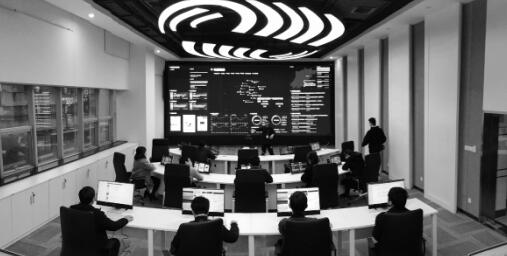
Central control hall of intelligent media center of Hangbao Group. Information picture
"In the traditional media, the first attempt at electronization was a local newspaper-Hangzhou Daily Afternoon Edition. On December 6, 1993, Hangzhou Daily Afternoon Edition was transmitted through the city’s online service network, which opened the prelude to the electronization of China newspapers. " This description comes from the journalism and communication textbook China Journalism and Communication History edited by Professor Fang Hanqi of China Renmin University.
From a four-page newspaper printed with lead movable type to more newspapers and periodicals; From the regional media with dozens of employees working in a small building less than 100 square meters when it was founded, it has become a well-known local newspaper group in Zhejiang Province and even the Yangtze River Delta. Hangzhou Daily, the predecessor of Hangzhou Daily Newspaper Group, has produced the first "electronic newspaper" in China, and has embarked on a characteristic road in the exploration of media integration.
Hi! Good afternoon
The trip to the avenue opens the way for public opinion. The national public opinion circles are very active, and new theories, new viewpoints, new experiences and new practices emerge one after another, which are reflected in the field of news reporting. The new reporting topics, information and models make it difficult for the original single newspaper to carry them. At that time, under the background of the flourishing of evening newspapers all over the country, Hangzhou Daily opened the first "bold breakthrough" in the country-the afternoon edition was founded.
The approval of the afternoon edition went smoothly. The approval process of Hangzhou Municipal Committee and Zhejiang Provincial Party Committee Propaganda Department was completed in two days. On November 1, 1993, Hangzhou Daily Afternoon Edition was officially published. Like its parent newspaper, Hangzhou Daily, the Afternoon Edition is the organ newspaper of Hangzhou Municipal Committee of the Communist Party of China, which forms a mutually rolling, extending and complementary relationship with the reports of the parent newspaper. The report is more lively in form, more close to the people in perspective, more rapid in timeliness, wider in field, more novel in means and more brisk in style.
One day before the publication of the inaugural issue, an editor reported his ideas to the leader: "Hi! Good afternoon ",which is also known as the shortest inaugural word in history. The afternoon edition takes this as an opportunity to drastically improve the style of writing, such as not repeating the introduction of general news, and increasing the sense of scene and visual effect by on-site reporting. On December 6th of the same year, Hangzhou Daily Afternoon Edition founded the first "electronic newspaper" in China.
Look! Electronic newspaper
"Electronic newspaper" means that the editorial department of Hangzhou Daily will input the printed newspaper content into the network of the computer online service company through the communication line. Users can access the newspaper content that has entered the online service network through the computer through the telephone line.
The "electronic newspaper" launched by Hangzhou Daily is loaded and transmitted synchronously with the publication of Hangzhou Daily through the Hangzhou social online service network-Prospect Consulting Network. Readers can quickly see the full-page newspaper content or the required news, stock market quotes, foreign exchange quotes and other contents on the computer screen, which greatly improves the timeliness and competitiveness of news. At that time, there were hundreds of users of Prospect Information Network in Hang Cheng, and they could see all the contents of Hangzhou Daily on the computer screen every morning. You can see Hangzhou Daily Afternoon Edition at noon.
This caused quite a stir in the domestic media at that time. Zhang Kaiqing, Chairman of Hong Kong Jinshan Computer (Group) Co., Ltd., and Hong Tianci, Chairman of Singapore ATS Group Company, made a special trip to Hangzhou Prospect Consulting Co., Ltd. to visit and apply for joining Prospect Consulting Network, so as to keep abreast of various development information in Hangzhou. Guangdong Dongguan municipal government and other units outside the province have also called to inquire and applied for network access.
The advent of "electronic newspaper" reflects the spirit of continuous exploration and innovation in the form and carrier of paper media, which marks an important step for newspapers to spread from paper media to electronic network on the road of electronic collection, editing and publishing.
Since then, Hangbao Group has created many national firsts: In 1999, Metropolitan Express became the first four-opening special-shaped extended newspaper in China, leading the trend of China Metropolis Daily; In 2000, the news portal "Hangzhou Net" was founded, which took the first step for the traditional paper media to truly "touch the net". In 2005, he took the lead in launching the strategy of digital newspaper industry in China. In 2008, the development model of "one newspaper and one network" was put forward, and the integration of newspapers and networks and the transformation of all media were tried; In 2009, it was the first time that newspapers, internet and mobile phones were integrated into the media model in China.
Deciduous! convergence media
Although the "electronic newspaper" of Hangzhou Daily Afternoon Edition is of pioneering significance, at that time, when China was not connected to the Internet, this network was too small to be confined to a corner of Hangzhou, and this "touching the net" was still immature in technology, so its influence was limited.
Compared with the present, the first "electronic newspaper" can only be counted as a member of the traditional media. A number of new technologies, such as artificial intelligence, big data, cloud computing and virtual reality, have emerged one after another and been applied to news communication. These new technologies have completely changed the original media structure and brought severe challenges and transformation opportunities to the development of traditional media.
How to inherit and carry forward the innovative genes of Hangbao Group in the new era and new situation, and actively embrace change and actively transform opportunities? In the view of Dong Yue, secretary of the Party Committee and president of Hangbao Group, it is necessary to "adhere to the development concept of" growing with the city ",base on Hangzhou metropolitan community, shoulder the responsibility and mission of the mainstream media to" educate people "and" prosper with literature ",and make Hangbao Group a local news source, authoritative information publisher, in-depth special topic interpreter, bridge of communication between the party and government and public opinion, and social information circle for citizens, and strive to create a challenging, but
Through the efforts of several generations of Hangbao journalists, Hangbao Group has now built a mainstream communication matrix among similar media in the country, which highlights the media’s communication power, guidance, influence and credibility. There are nearly one million print media subscribers, and all kinds of new media products including mobile phone client, WeChat WeChat official account, mobile video products, official Weibo and Internet community, etc. There are 25 websites, 13 mobile phone clients, 109 WeChat WeChat official account, 20 official micro-channels in Weibo, 10 mobile newspaper products, 5 digital newspaper products and 6 audio and video products, covering 197 million users, which has laid a solid foundation for the media credibility of the newspaper group and the market influence of the company. (Reporter Huang Lin)
Original title: Hangzhou Daily’s "Touching the Net" —— From the first "electronic newspaper" in China to the transformation of media integration