Gain imagination and innovation from the differences of different cultural civilizations
[Dialogue of Guangming International Forum]
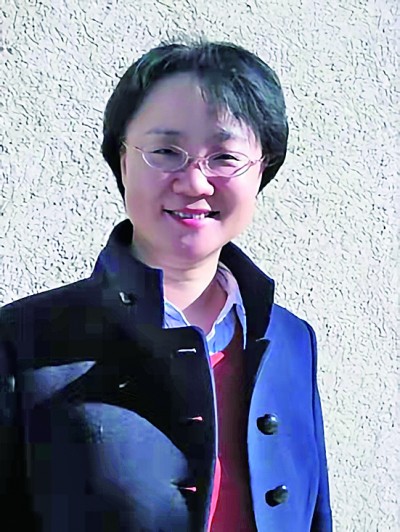
Yan haiping
Professor and supervisor of modern literature, comparative literature and cross-cultural studies in Tsinghua University Foreign Languages Department and Chinese Department, chief professor of the World Literature Class in Tsinghua School, and dean of the Tsinghua University Institute of World Literature and Culture.
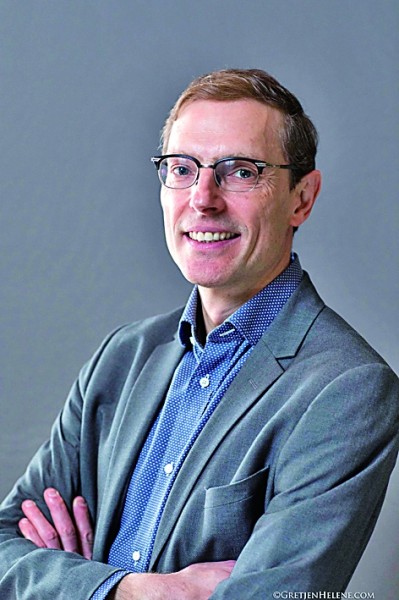
Martin Puchner
Byron and anita Wayne are professors of drama literature, English literature and comparative literature at Harvard University.
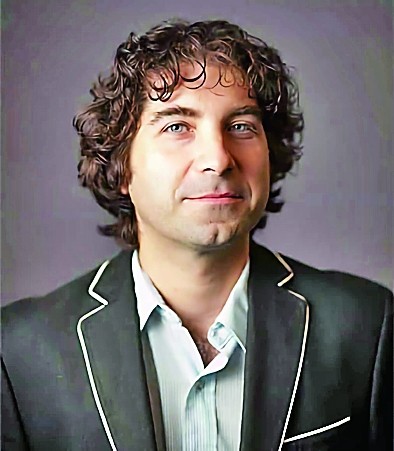
Laurent de Boriai
Life-long senior professor of French literature, French literature and comparative literature at Cornell University, winner of the French Palm Leaf Academic Knight Order.
Advantages and Disadvantages of Online Education and the Core of University Education
Laurent de Boliai:Optimists may think that the epidemic will provide an unexpected opportunity for the expansion of "global consciousness"-because we are all likely to be affected by a common threat, this crisis may bring a new sense of interconnection. But this is not entirely the case. For example, we can see that there has been some kind of localism turn or self-preservation retreat at the two levels of ideological tendency and daily behavior. Some changes can be positive, such as the emergence of a new experimental community life mutual help and self-help model; Some are variations of chauvinism, such as "exceptionalism" and "supremacy". Broadly speaking, as more and more of our thoughts are uploaded to the global network, the homogenization and standardization of individuals and their behaviors have reached the peak at all levels. Numbers seem to be ruling the way we communicate, express our emotions and express our opinions, and the way is often the content.
The core driving force of modern university education is academic creation, that is, to enhance the dual ability of connecting the past and building the future through intellectual creativity. This goal mechanizes and standardizes spiritual life, makes mental thinking inertial and procedural, and explains the ever-changing life with ready-made or simple reasons, which is opposite. All these phenomena and problems are aggravated by the isolation of many countries in response to the COVID-19 epidemic. As a university professor, my primary task at present is to protect the space necessary for creative thinking in the face of the challenge that the time required for human beings to realize education and creativity may be shortened, and to constantly make new and effective explanations.

On October 21st, in Frankfurt, a visitor (left) communicated with a staff member of the joint booth of "China Publishing" in the China book exhibition area of Frankfurt Book Fair. Xinhua news agency
Martin Puchner:Since the outbreak, we have continued to use zoom and similar video teaching platforms intensively, and now we are all tired. But obviously, online education has been greatly promoted. I joined a school-wide working group to think about the future of education. At present, we have put forward some quite ambitious plans, including creating a complete digital campus. There is a huge demand for high-quality education all over the world. I think this is an opportunity. Elite universities like Tsinghua and Harvard can educate more students than at present. This makes me very excited about the future of education. We have a good understanding of what works and what doesn’t work in online education. Now we can sum up the previous experience and lessons and design some really effective methods.
Yan Haiping:How not to make online courses an easy version of information dissemination is an important issue. Online teaching is not massive open online course, but real teaching and learning through cloud classroom. This puts forward new requirements for the humanistic use of technology, including the active grasp of technology, the ability of creative integration and the scientific cognitive spirit full of humanistic imagination. I once listened in on Mr. Tsinghua’s class online and was very inspired. For example, a teacher who teaches Shakespeare’s plays skillfully uses all media, such as text marking, poem recitation, scene performance, montage of visual materials, and interactive teaching and learning between teachers and students, thus teaching a three-dimensional Shakespeare and his world. As for the negative impact of the epidemic, there is no need to avoid it. Face-to-face discussion in physics class and the life style of knowledge community on campus contain the wisdom crystallization of civilization renewal and extension in the long history of mankind, which is irreplaceable by various technological revolution means including online teaching.
Great changes in education in the digital trend and the significance of humanities
Laurent de Boliai:We need to pay attention to the problems caused by the impact of new technologies, which may narrow our thinking range instead of opening up a broader space for human innovative thinking. The production mechanism of digital media has actually instilled in us a specific content, that is, under the logic of capital operation, under the guidance of market profit rules and operating procedures, providing "content options" that look constantly changing but are actually homogeneous. Our thinking and even our minds are also limited by "instant messaging" based on the Internet, and everything is programmed under the information pressure brought by the accelerated capital flow. This rapid change of procedure and so-called activity is a kind of interference, even a loss, for any human ideological activity that needs long-term attention and dedicated analysis.
In this regard, we need: first, to create a spiritual space for learning ideas, whose attributes and logic are different from the "capital flow" centered on immediate response program operation; Second, liberating humanities and education itself from being bound by technological operation and its efficiency logic is not against the scientific revolution-technology is not equal to science, but truly embraces the scientific spirit itself and forms an alliance with science, scientificity and revolutionary creativity as science; Third, adhere to the diverse connections and differences across time, space and environment in the life world.
Martin Puchner:I agree with the indispensability of humanities in the great changes of education. It is a great pity that the humanities hardly played any role in the future education Committee and working group I participated in. In short, part of the reason is related to misunderstanding. For example, it is believed that humanities degrees can not bring good career opportunities and life prospects to young people, although there are convincing statistics showing that this is not the case. Part of the reason is related to conservatism within the humanities, which leads humanities scholars to intuitively and habitually reject new technologies and other innovations. Part of the reason is related to the fine division of majors. At least in the United States, many courses taught by humanities scholars are designed for future majors in humanities and even literature, rather than benefiting the overall development of a wider student group and knowledge community. These problems existed before the emergence of online education, indicating that the humanities are now in a structurally weak position. At the critical historical turning point of the current development of higher education, this will bring many long-term regrets, because humanities can and must play an extremely important role. From what I have heard, there is no similar weakness in the humanities in China.
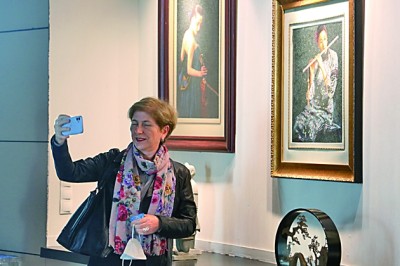
On October 14th, the audience took selfies at the China Silk Embroidery Exhibition at the Nazem Khikmet Cultural Center in Ankara. Xinhua news agency
Yan Haiping:Chinese’s literature is a part of the world’s humanistic literature. Like the academic circles in other countries, it faces many common challenges and opportunities in the great changes. In 2016, we initiated and jointly established the "China-UK Higher Education Humanities Alliance" with major Chinese and British universities including Peking University, Fudan University, Cambridge and Oxford. We propose that economic globalization, which is increasingly driven by digital media and technological revolution, as another stage in the long-term changes in modern times, is changing the face of the world that spans all countries and regions and is shared by mankind. In the great changes, everything in the world is closely linked, so the differences are fully revealed. In order to achieve sustainable development, humanities academic and humanities education, which focuses on cross-cultural knowledge production, communication and innovation, has a clearer historical function and important significance. This is the consensus basis for the sustainable development of the alliance so far.
All kinds of tensions and frictions in the global epidemic have confirmed the historical situation that human society is closely linked in profound differences. This situation is still accelerating, and the variables produced by scientific and technological changes in the next 30 years will exceed the sum of variables produced by scientific and technological changes since modern times. No matter how innovative science and technology are and how powerful the economy is in the era of globalization, the way in which it is related to human individuals, communities, nationalities, regions and different types of countries is particularly important. No country, region, population or individual can unilaterally cope with such great changes and reconnection in great changes, and multilateral cross-cultural humanities exchanges and cooperation are more urgent than ever.
In the concrete cross-cultural communication, we discuss how to grasp the concrete experience full of differences, melt the human knowledge that can be shared, and contribute to the world by explaining the world to describe China and describing China in the spirit of "humanity is new" in today’s world context composed of thousands of languages and their relationships. This is the theoretical origin of Tsinghua University’s establishment of the Institute of World Literature and Culture in 2016 to complete the organizational reform of foreign languages and literature departments. The term "world literature and culture" here can include, but not refer to, an established major, but point to a vision of cultural intercommunication and mutual learning of civilizations, so as to help us update our methods and fields in education, reading and academic work, hoping to leave an intellectual labor in the human welfare of "harmony and symbiosis" and "beauty and beauty".
What is needed in today’s world is exchange and cooperation rather than homogenization.
Martin Puchner:More exchanges and cooperation between countries and nations have always been extremely necessary and beneficial, and there will never be an end, and there will never be a day of satisfaction. At the same time, I often overestimate the power of communication and cooperation. Before the First World War, the world had achieved a considerable degree of economic globalization, but it was followed by a period of intensified and intensified narrow nationalism, including the two world wars that eventually led to it. Therefore, efforts such as international exchange, cultural communication and educational cooperation cannot solve all the problems in the human world by themselves. However, such efforts play an important role, especially in today’s world with multiple power centers, competition between different blocks and coexistence of different political systems. For example, the current tension or friction between China and the United States does not make me think that we should reduce exchanges and cooperation. On the contrary, this is the moment when we need to strengthen exchanges and cooperation more.
Laurent de Boliai:Theoretically, it seems that people today can easily establish contact with many different interlocutors. However, how do you choose the person you contact? How to talk, talk and even cooperate with them? In practice, the ready-made convenience of communication channels does not automatically mean that we have more space to meet others and gain new life experiences from them. There is often such a phenomenon, that is, such digital channels constitute many small groups "like us", which are clustered together in a homogeneous way, rather than gaining new experiences and growth from cultural diversity.
For example, the "identity politics" in the United States, based on skin color, race, gender, etc., brings "the same people" together. The paradox is that holding a group in this way actually compresses rather than expands people’s imagination, mental world and emotional friendship. There will be communication in groups that are identity-centered or focus on the intersection of several identities, but it is difficult to have a "dialogue", that is, it is difficult to gain new experiences that break through their own limitations and gain the ability to change by absorbing new experiences. At present, one of our goals should be to strengthen meaningful dialogue with different people, so as to protect the life world with creativity and rich possibilities.
Yan Haiping:The old China saying "Beauty and Beauty Together" and "Harmony and Symbiosis" I mentioned earlier carries the life information and wisdom of human beings in the long association. Humanistic research and education, which focus on cross-cultural communication and cooperation and innovation, is one of the contemporary knowledge carriers to inherit this information and wisdom, and one of the paths for different countries, nationalities, groups and individuals to learn from each other and update each other. Since the Peace Treaty of Westphalia in the 17th century, the geopolitics of modern nation-state originated in Europe and its hierarchical and balance-of-power logic dominated by power have had a profound and long-term influence on shaping the world pattern and its cultural concepts, including the established mode of taking nation-state as the category of knowledge production organization and its inertia limitations. After World War II, the field of comparative literature and a series of related interdisciplinary knowledge frontiers generated and developed in Europe and America are some intellectual reflections and cultural breakthroughs on the limitations of this established model.
As far as my personal experience is concerned, comparative literature, transnational differences, cross-cultural subject innovation and talent training in the United States are mainly composed of English, French, German and Spanish. In Tsinghua University, where I teach, Tsinghua’s humanities and Tsinghua’s culture, as one of the sources of China’s pioneering and developing humanities since modern times, have been characterized by innovative ideas and study methods across languages, cultures and civilizations from the beginning, which always contain inquiries about geopolitics and the logic of balance of power originating in Europe, and demands for diverse and new ways of modern national and ethnic relations.
Pay attention to the life world different from "standardization and homogenization"
Martin Puchner:The cross-cultural development of humanities faces many difficulties. At least in most colleges and universities in the United States, it is still the basic status quo to use the unitary nation-state as the cognitive framework of discipline organization to produce knowledge. In my opinion, this is the main problem. Reorganizing the structural layout of departments, updating the requirements of professional competence, changing the evaluation and examination methods, etc., need many conditions to support, and the change is really not easy. As far as my limited understanding is concerned, the world literature class established by Tsinghua University World Literature Institute and Foreign Languages Department is an important example. As far as the general conditions of colleges and universities are concerned, perhaps these changes will not happen until other conditions are in place, partly because humanists often insist on maintaining the inertial knowledge system, at least in the United States. A paradox that puzzles me is that many humanists consider themselves pioneers of social change, but when it comes to their own cognitive composition and production methods, they are often conservative. A major methodological change that is taking place in the humanities is the digital humanities. It was over-hyped at the beginning, which led to a predictable rebound, but in the medium and long term, interesting changes in humanistic methods may come from this corner.
Back to the cross-cultural perspective. I sometimes wonder whether the question also includes the dimension of "scale". A large society tends to be more conservative, narrow-minded and self-centered than a small society. Of course, scale is not the only important element, but I am more and more inclined to think that scale is an important factor. This means that a huge society like ours must make special efforts to enable students to gain their much-needed international vision and ability.
Laurent de Boliai:I am very willing to study very different languages, texts, behaviors and thinking logic with students, and feel very rewarding. We should encourage the younger generation to have a careful understanding of the inherent multi-faceted tensions and subtle differences in various languages, texts, ways of behavior and thinking logic, as well as the productive nature of these tensions and differences. In other words, we attach importance to the life world different from "standardization and homogenization", and we attach importance to the humanistic meaning of the life world, because we think it is more imaginative, rich and innovative than the standardized and homogenized culture. Between the speculative form of humanistic exploration and the limitless science and technology, we should re-establish a dynamic relationship. Scientific and technological innovation is the main driving force of today’s global society, and science and technology have never developed in isolation. The development of science and technology is the development of people’s life world, and the development of people’s mutual relationship, that is, cross-cultural association. We encourage a new generation of humanities scholars to boldly create, discover, grasp and even invent the interactive and ubiquitous connection between new theories and daily reality.
Yan Haiping:In a certain sense, humanistic literature is a modern practical process of human wisdom, which melts the life experience that is unrepeatable from generation to generation into value knowledge that can be used for reference and reconstruction from generation to generation, and supports, broadens and enhances the connotation and quality of life.
At the same time, the proposal of cross-cultural academic and educational theory stems from the internal needs of each of us how to settle down in today’s world. The correlation and cognitive integration of cross-language families and cross-cultural civilizations have been practiced, experienced and called by generations of scholars in China and the world since modern times. Its productive power is particularly prominent in the period of historical change. Social individuals and groups born in different language families and cultural civilizations have transcended the limitations of established habits, inspired each other and updated each other in the consciousness of differences, forming an indispensable life experience and an imaginative time and space full of kinetic energy in modern times; For the development of cross-cultural humanities and humanities education, it provides a profound resource for knowledge innovation. I quite agree that this kind of knowledge production needs the basic support of production mechanism and a moderate fit with the social environment, which is possible and sustainable.
Human culture has been learning from each other and innovating.
Martin Puchner:When trying to understand the cultural evolution on a global scale for thousands of years, I was shocked by two things. The first thing is that cultures have been learning from each other from the beginning. For example, China borrowed Buddhism from India, while Japan borrowed Buddhism from China, and Europe borrowed Christianity from the Middle East. Sometimes, the borrowing of these series includes strange gaps and circuitous ways. For example, ancient Greek philosophy was forgotten in Europe, but it was preserved in Baghdad before being re-imported into Europe. It is also interesting that Rome decided to translate the whole Greek literary classics into Latin for no reason, and turned Greek into its ancestors, even though the Romans had no connection with Greece. Therefore, this is a confusing picture. Sometimes, cultural imports are imposed on conquered countries. But more often, these imports and exports do not follow clear boundaries of power. More often, the borrowing of culture is not a sign of the weak, but a sign of the strong.
Another impressive thing is that in each case, cultural borrowing is part of an incredible creative adaptation process, leading to a striking new cultural form. When Rome borrowed Greek canon, it created something completely new. Learning from something seems to release creative energy.

On November 10th, a Rwandan student tried on China’s clothes. On the same day, the activity of "China Culture Entering the Campus" was held in the School of Education of Rwandan University. Xinhua news agency
These two points lead me to the conclusion that reducing cultural exchanges will mean reducing all the factors that make culture flourish. At the same time, more exchanges and mutual learning may bring about various creative absorption and adaptation processes, which in turn will lead to the formation of a specific integrated new culture. If so, I think it’s good; Otherwise, the world of life will become monotonous and boring.
Laurent de Boliai:As a species in the sense of zoology, Homo sapiens also depends on countless other biological species and different beings, and we really depend on everything. Of course, this does not mean global convergence and standardization. On the contrary, recognizing that human beings are connected with other diverse worlds of time and space will lead to a series of meaning extensions. On the one hand, this means a firmer view that every living thing and existence on earth is intrinsically related to us. On the other hand, it is a hope to maintain the rich heterogeneity in the world. Just because everything shares a planet, the difference between everything is the embodiment and vitality of coexistence. On the other hand, "cross-culture" transcends the potential and imagination of human egoism, that is, we not only continue our lives in a variety of different worlds, but also cross, meet, talk, cooperate, imagine and create among these worlds.
Yan Haiping:This is an era full of challenges and opportunities, which requires courage, conviction and imagination. In recent years, I have been sorting out the Chinese and English texts written in the past decades, and some books and letters about the cultural world in modern times accumulated and reread over the past decades. I keep classifying them by language, time, subject, proposition, etc., and at the same time, I open up another category, and put them on the combined bookshelf with a paragraph sentence, some life information and their explicit or implicit correlation. They cross all kinds of cognitive boundaries established by habits, and form a constellation group that is irreducible but inseparable from each other, calling, arguing and enlightening each other in the form of multiple polyphony. My duty is to listen to and record the endless human conversations.
(Translation: Ran Haoyan, Zhang Hanwen)
Guangming Daily (November 28, 2021, 08 edition)