Iran responded to the proposal to ease the situation in the United States and Iraq: it will not accept unless the United States stops sanctions.
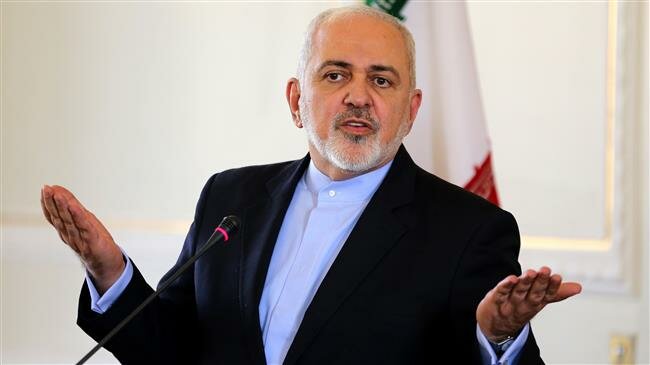
Iranian Foreign Minister Zarif. (Photo: Farce News Network)
Overseas Network July 11thEarlier, the French side proposed a "double freeze" proposal that the United States and Iran freeze sanctions and nuclear programs at the same time to ease the tension between the United States and Iran. The Iranian side clearly rejected this today (11th), and further stated that it would not accept the request of the United States to return to the negotiating table until the United States lifted the economic sanctions against Iraq.
According to Iranian official media Farce News on the 11th, Iranian Foreign Minister Mohammad Javad Zarif told reporters in Teheran on Thursday (11th) that Americans left the negotiating table on their own, and now they claim that they are "ready for negotiations"; If you are really ready for negotiations, you should abandon the economic sanctions imposed on Iran. Zarif said that as long as sanctions continue, the United States should not expect the two sides to sit down and talk.
When talking about whether the French President’s diplomatic adviser proposed a "freeze for freeze" to Tehran during his recent visit, Zarif said that the French side only proposed a proposal to ease the tension between the United States and Iran. Zarif said that France does not intend to play a mediating role between Iran and the United States. "We told him that as long as the United States is still engaged in an economic war with Iran, don’t expect Iran to stop taking uranium enrichment measures. Either Europe takes necessary measures or the United States should stop its economic war against Iran. "
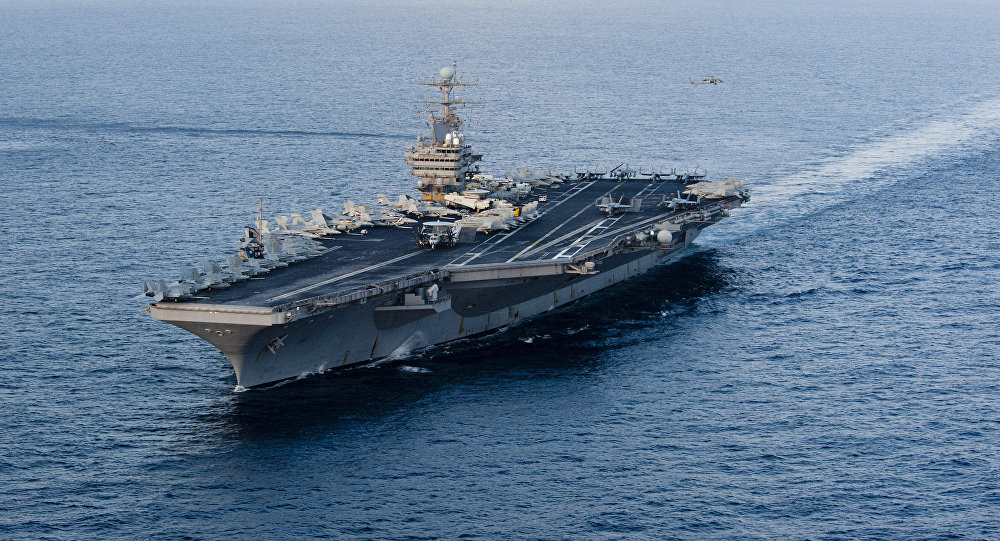
Tensions between the United States and Iraq have intensified. The picture shows the United States deploying aircraft carrier battle groups to the Middle East. (Photo: AFP)
It is understood that the JCPOA agreement signed by Iran, 5+1 countries (China, France, Russia, Britain, the United States and Germany) and the European Union in 2015 provides for the gradual lifting of international sanctions against Iran in exchange for Tehran to curb its nuclear program and allow inspections of its nuclear facilities to ensure that the country’s nuclear energy is used for peaceful purposes.
After the new US administration took office, it has been criticizing the "catastrophic defects" of the Iranian nuclear agreement, demanding that the US Congress and European countries revise the terms of the agreement and withdraw from the agreement in May 2018 to restart sanctions against Iraq. On May 8, 2019, after the first anniversary, Iranian President Rouhani announced that Iran would suspend the performance of some provisions of the the Iranian nuclear deal and set a 60-day deadline. On July 7th, Iran officially announced that from now on, Iran will gradually increase the enriched uranium, and will no longer be restricted by the the Iranian nuclear deal’s 3.67%.
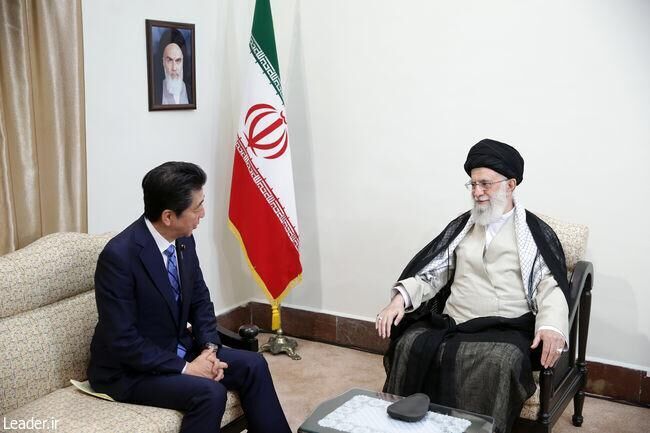
The Iranian side has repeatedly refused to negotiate with the United States. The picture shows Khamenei meeting with Abe. (Photo: Iran’s Supreme Leader website)
At the same time as the tension has intensified, the United States has repeatedly proposed to hold talks with Iran in the past few weeks. At a joint press conference with American leaders in Tokyo at the end of May this year, the Japanese Prime Minister indicated that he would make efforts to promote dialogue between Tehran and Washington. The United States welcomed Abe’s proposal at that time, and American leaders even said that "we know that Japan has a good relationship with Iran, so we will wait and see." On June 2nd, US Secretary of State Pompeo also said that the US is willing to talk to Iran "without conditions", but will continue to put pressure on Iraq.
In this regard, the Iranian side has repeatedly reiterated that it will not negotiate with the United States unless sanctions are lifted. On June 13th, Ayatollah Seyyed Ali Khamenei, Iran’s supreme leader, even said that Iran would not hold talks with the United States, because Iran had no confidence in the United States and thought that the United States was unworthy of contacts. Khamenei also stressed that no wise and independent country will accept negotiations under pressure. (Compile/Overseas Network Hou Xingchuan)